
MyNotes: What is Action Research?
Source (print): What is Action Research?
Article shared in print with me. Here are my take-aways from the article.
Source: https://www.det.nsw.edu.au/proflearn/images/actreslg.gif
Read more here

MyNotes:
-
Action research describes the integration of action (implementing a plan) with research (developing an understanding of the effectiveness of this implementation).
-
The central goal of action research is positive educational change.
-
Teachers use action research because it can provide immediate results, fosters stronger relationships among staff, and a fresh approach to examining one’s practice.
-
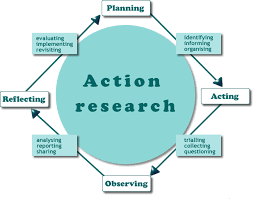
Action research cycle includes asking what if, trying that out in your classroom, observing what hapens, reflecting and then planning to re-use the strategy.
-
The four stages of action research include:
-
Planning
-
Identifying the issue to be changed.
-
Looking elsewhere for information.
-
Developing questions and research methods to be used
-
Developing a plan related to the specific environment (e.g. personnel, budgets, use of outside agencies).
-
Acting
-
Trial the change following your plan
-
Collecting and compiling evidence
-
Questioning the process and making changes as required
-
Observing
-
Analyzing the evidence, collating the findings
-
Discussing the findings with co-researchers and/or colleagues for the interpretation
-
Writing the report
-
Sharing your findings with stakeholders and peers
-
Reflecting
-
Evaluating the first cycle of the process
-
Implementing the findings or new strategy
-
Revisiting the process
One Sentence Summary:
Teachers use 4-stage action research process because it can provide immediate results in response to “What If?” question that innovate on practice, foster stronger relationships among staff, and enable a fresh approach to examining one’s practice.
Quotes:
-
Action research is flexible, quick time frame, controls through triangulation
-
Action research’s application of results has practical significance.
-
Action research provides educators with alternative ways of viewing and approaching educational questions providing a new way of examining their own practices.
Everything posted on Miguel Guhlin’s blogs/wikis are his personal opinion and do not necessarily represent the views of his employer(s) or its clients. Read Full Disclosure