
2
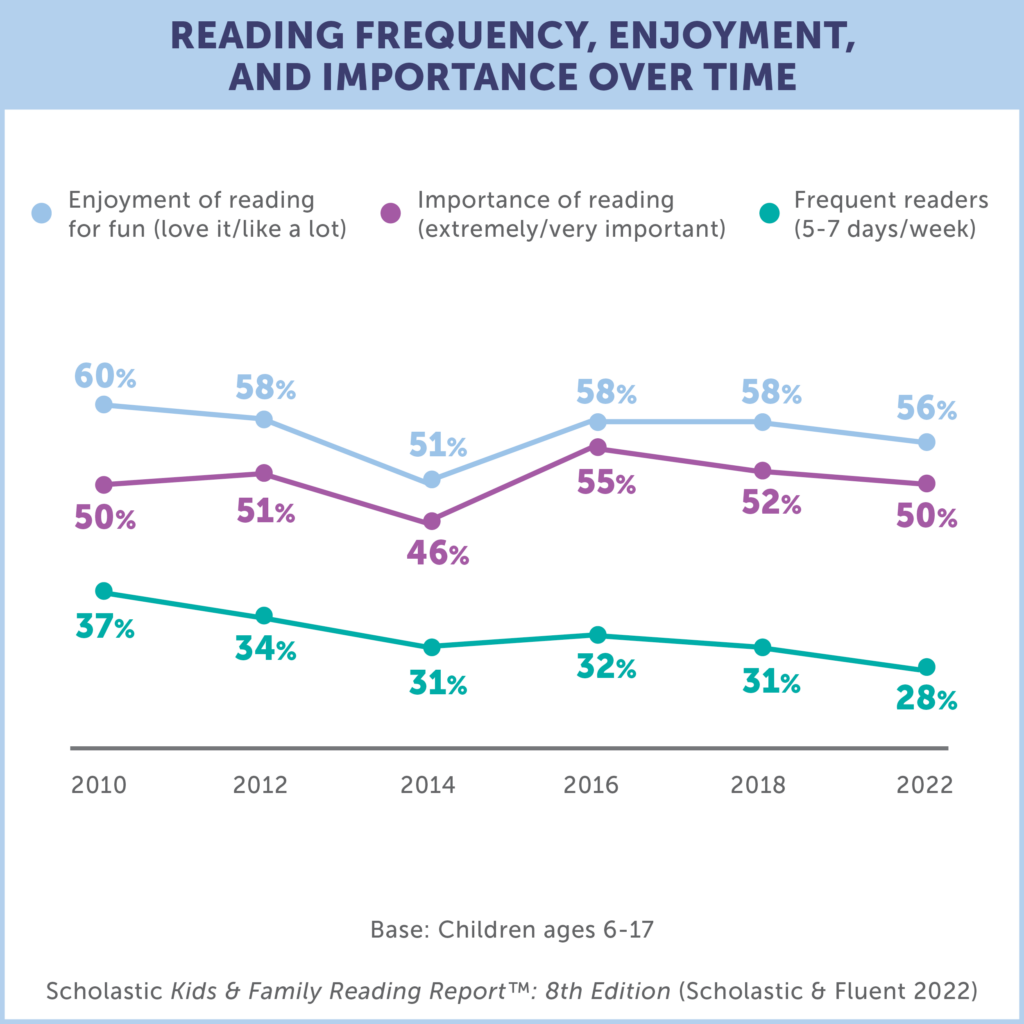
Did you know that only 43% of children aged 8-18 enjoy reading? That number is down from 58% in 2016 (source). What’s more, American nine and thirteen year olds who read for fun daily has dropped to its lowest levels since the mid-1980s (source). Virtual author talks offer one way to spark students’ interest in reading. Let’s explore a possible resource that can enhance literacy in classrooms. At the end, I also remind you of AI narrated audiobooks available. What’s more, get introduced to a free for US schools for human-narrated audio books.
With those facts in mind, what are five ways educators can harness virtual author talks to enhance literacy in their classrooms?
BookBreak is a platform created and developed by the industry-leading Library Speakers Consortium, which has many years of experience working with authors and publishers in delivering amazing online programs.
1. Integrate Author Talks into Your Curriculum
“How can educators effectively integrate author talks into their curriculum to maximize the benefits for their students?” you might ask. One way is to use services like BookBreak.org (see list at the end of this blog entry).
It makes it easy to bring authors into the classroom and that can boost student engagement with literature:
BookBreak brings 2-4 bestselling elementary and middle school authors to schools each month via live stream. Events are geared toward specific grade cohorts such as K-2nd, 3rd-5th and 6th-8th. Each grade level has the opportunity to hear from an age-appropriate author at least once per month throughout the school year. Recordings of the talks are also available on our platform. The live events are 10-15 minutes long for elementary school and 15 to 25 minutes long for middle school.
Three ways to blend them into your classroom work:
- Schedule author talks to coincide with relevant units in your language arts curriculum.
- Use the author’s books as part of your reading assignments before the virtual visit.
- Develop writing prompts inspired by the author’s work or writing style.
For example, a 5th-grade teacher at Edgewood ISD incorporated a virtual talk with a historical fiction author into their American Revolution unit. Students read one of the author’s books set in that era, then had the chance to ask the author about their research process and character development.
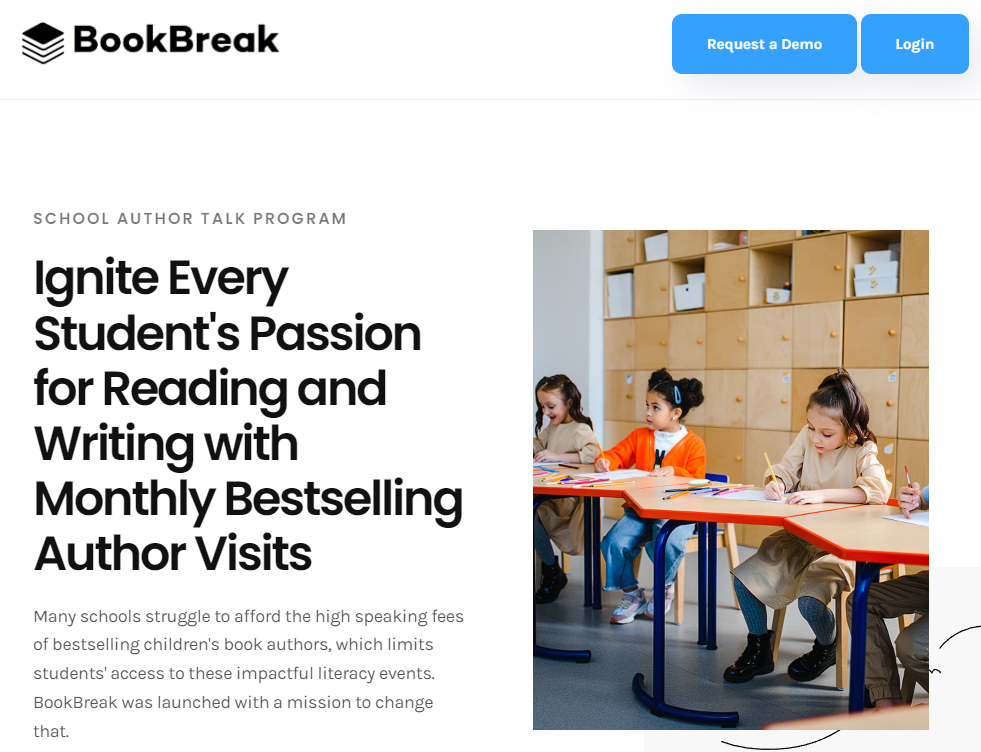
Screenshot by author of The Library District, Las Vegas-Clark County
2. Foster A Range of Perspectives Through Author Selection
“By featuring authors from diverse backgrounds, we can ensure that students see themselves in the stories they read. This can foster a deeper connection and understanding of literary works.” Virtual platforms like BookBreak prioritize a wide range of voices and experiences:
- Choose authors from various cultural backgrounds to reflect your student population.
- Balance male and female authors throughout the year.
- Include authors who write about diverse topics and themes.
A middle school English teacher at Edgewood ISD reported increased engagement from her students. This happened when they had the opportunity to interact with authors who shared their cultural backgrounds. “Seeing themselves represented in successful authors really motivated my students to pursue their own writing,” she noted.
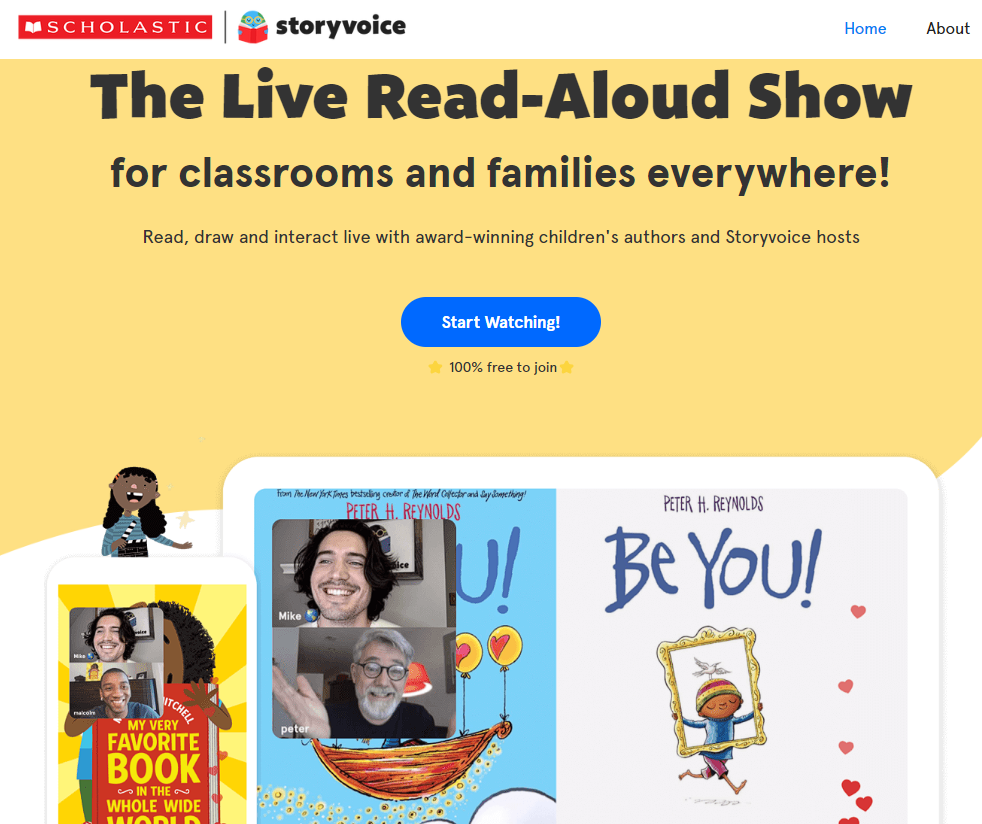
Screenshot by author of Scholastic’s Storyvoice website
3. Use Pre- and Post-Talk Activities to Deepen Learning
Maximize the impact of virtual author talks by framing them with thoughtful activities:
- Before the talk: Have students research the author and prepare questions. They can read excerpts or summaries of the book as well as other works to gain deeper insight. Character analysis can also be an important component.
- During the talk: Guide students in taking notes on the author’s insights and advice.Handwritten notes, concept maps, graphic organizers can scaffold student thinking.
- After the talk: Facilitate a class discussion about what they learned and how it applies to their own reading and writing.
An elementary school librarian at Edgewood ISD created a “Meet the Author” bulletin board where students posted their favorite quotes and lessons from each virtual talk, creating a visual reminder of their literary connections.
Another idea? Consider giving students a reverse outline or advance organizer that they can add to throughout the virtual talk. Some other ideas include:
- Read aloud, then get feedback from others (Repeated Reading)
- Discuss with others (Classroom Discussion, Reciprocal Teaching, Jigsaw Method)
- Clarify vocabulary and meaning (Vocabulary Programs)
- Jot down important ideas and information (Outlining, Summarization, Concept Mapping)
- Annotate your text, write in the margins (Underlining and Highlighting)
- Interrogate text (ask questions and make a quiz for Retrieval Practice)
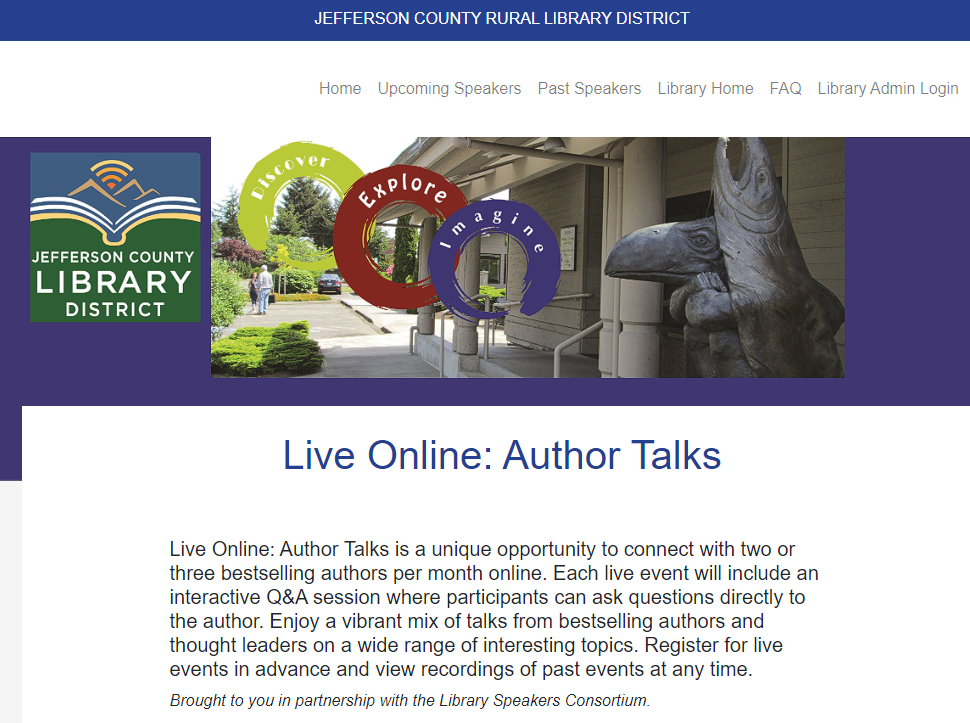
Screenshot by author of Jefferson County Library District website
4. Leverage Recording Features for Flexible Learning
“We’ve found that the recorded author talks on platforms…are just as valuable as the live events. They allow our teachers to revisit the content with their students, pause and rewind when needed, and even share with students who may have missed the live event. It’s been a game-changer for our district’s literacy initiatives,” says Brad CLoud, Director of Instructional Technology, Edgewood ISD. Virtual author talk platforms often offer recordings of their sessions. This makes it possible to do the following:
- Use recorded talks as part of lesson plans.
- Assign specific talks for independent work. This gives students time to engage with the content at their own pace.
- Create a tailored list of author talks students can listen to for inspiration and research.
“Being able to view the author visits after the fact is crucial, as ALL teachers are busy and can’t always catch a visit in real time” say some.
5. Extend the Impact Beyond the Classroom
One big benefit of virtual author talks? They facilitate collaboration between teachers and campuses. Consider these points:
- Empower collaboration with other teachers to create cross-curricular projects.
- Share highlights from the talks in school publications that engage parents with their children as they read.
- Create displays featuring books by visiting virtual authors.
Some libraries may find that virtual book talks enhance their role as a collaborative learning space. These often enable them to set up author-themed reading corners. Those have the potential to become popular spots for students.
Leverage Virtual Author Talks to Boost Literacy
Use virtual author talks to enhance student literacy, engage interest, and encourage young readers. You may end up changing the reading statistics for the next generation with the power of author voices.
Supplemental Resources
Below you will find an AI-generated guided activities table, as well a curated list of virtual author talk platforms.
Guided Activities Table
Activity Name
Description
Teacher’s Role
Student Engagement
Learning Outcome
Author Bio Scavenger Hunt
Students research the visiting author and create a visual biography
Provide research guidelines and resources
Collaborative research and creative presentation
Improved research skills and author familiarity
Question Craft Workshop
Students learn to formulate thoughtful questions for the author
Guide students in developing open-ended questions
Peer review of questions
Enhanced critical thinking and inquiry skills
Virtual Book Club
Students read and discuss the author’s book prior to the talk
Facilitate discussions and provide reading prompts
Active participation in book discussions
Deeper comprehension and analysis of literature
Writing in the Author’s Style
Students create short pieces mimicking the author’s writing style
Analyze the author’s style with the class and provide writing prompts
Creative writing and peer feedback
Improved writing skills and style analysis
Post-Talk Reflection Journal
Students write about their takeaways from the author talk
Provide reflection prompts and feedback
Personal reflection and connection to their own reading/writing
Self-awareness of reading preferences and writing goals
Generated with Perplexity.AI
Virtual Author Talk Platforms
Title with Embedded URL to Website
Description
Pricing
Use Scenario
A platform that brings 2-4 bestselling authors to schools each month via live stream, catering to specific grade cohorts. It aims to ignite enthusiasm for reading and writing by providing comprehensive planning resources and ensuring diversity in featured authors.
Not explicitly stated, but offers free access to high-poverty schools when other schools join the program.
Ideal for schools looking to integrate author talks into their curriculum, especially those seeking to enhance literacy and engagement among students.
Las Vegas-Clark County Library District Virtual Author Talks
Offers free virtual author talks with critically-acclaimed writers, available for viewing from home. Past talks are archived for later access.
Free
Suitable for public libraries and individuals interested in attending virtual author talks from the comfort of their homes.
Features live read-alouds by award-winning children’s authors and illustrators. The platform allows for interactive sessions and is accessible via share-screen or individual devices.
Not explicitly stated, but implies free access.
Ideal for classrooms and families looking for interactive live reading sessions with popular children’s authors.
Provides live online author talks in partnership with the Library Speakers Consortium, featuring multiple bestselling authors each month.
Not explicitly stated.
Suitable for libraries and educational institutions seeking to connect with a variety of authors through live online events.
A list of authors who connect virtually and in person
Varies by author
Ideal for educators hoping to connect with specific authors listed.
But wait, there’s one more FREE option!
Although not a virtual author talk source, Bookshare.org provides easy-to-read audiobooks and ebooks for readers, no matter what their ability. Get this…Bookshare is 100% free through an aware from the Office of Special Education Programs!
You can see a sample of their book selection via their website. What’s more, you can find a collection of human-narrated books (also, read TCEA’s blog entry on AI narrated books):
Bookshare has thousands of human-narrated audiobooks. You can listen to them in either MP3 or DAISY Audio formats on a variety of devices. Browse reading lists of their texts:
- Human-Narrated Audiobooks for Kids
- Human-Narrated Audiobooks for Teens
- Human-Narrated Audiobooks for Adults
- All Human-Narrated Audiobooks
See how to qualify and complete membership in the United States.
library spacelisteningreadingVirtual Author Talks
0 comment 0 FacebookTwitterPinterestLinkedinEmail