
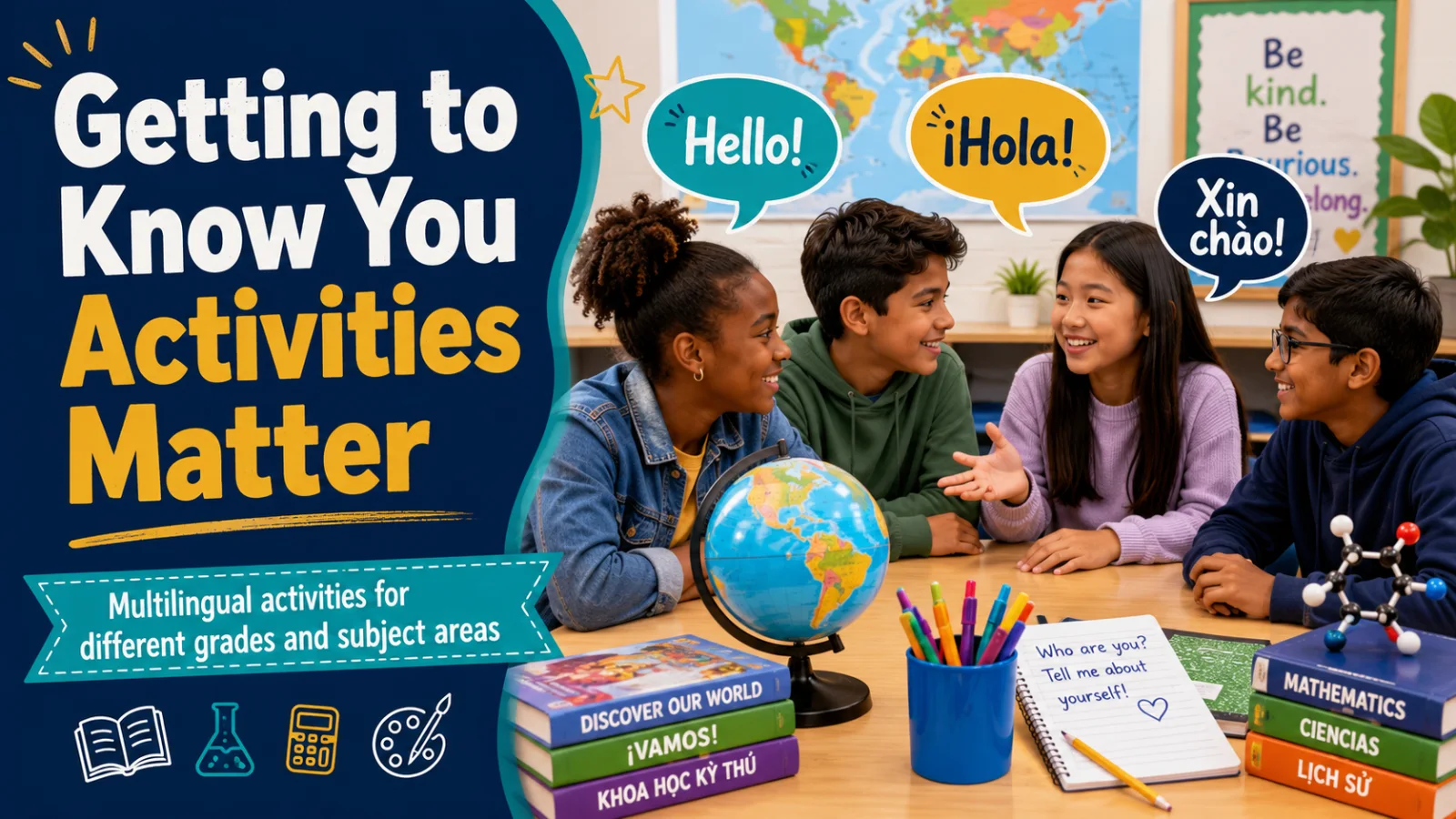
It is the first morning of school. Students are finding seats, studying one another, and waiting to see what kind of classroom this will be. Rules and procedures matter, but students are also asking: “Will I belong here?”
I have never been a fan of activities that force students to perform a personality before they know anyone. Those seldom go over well with adults, either, even in professional learning situations. A forced fun fact before first period rarely reveals much beyond who dislikes icebreakers. A useful Getting to Know You activity should give you information that improves teaching.
Introducing the Collection
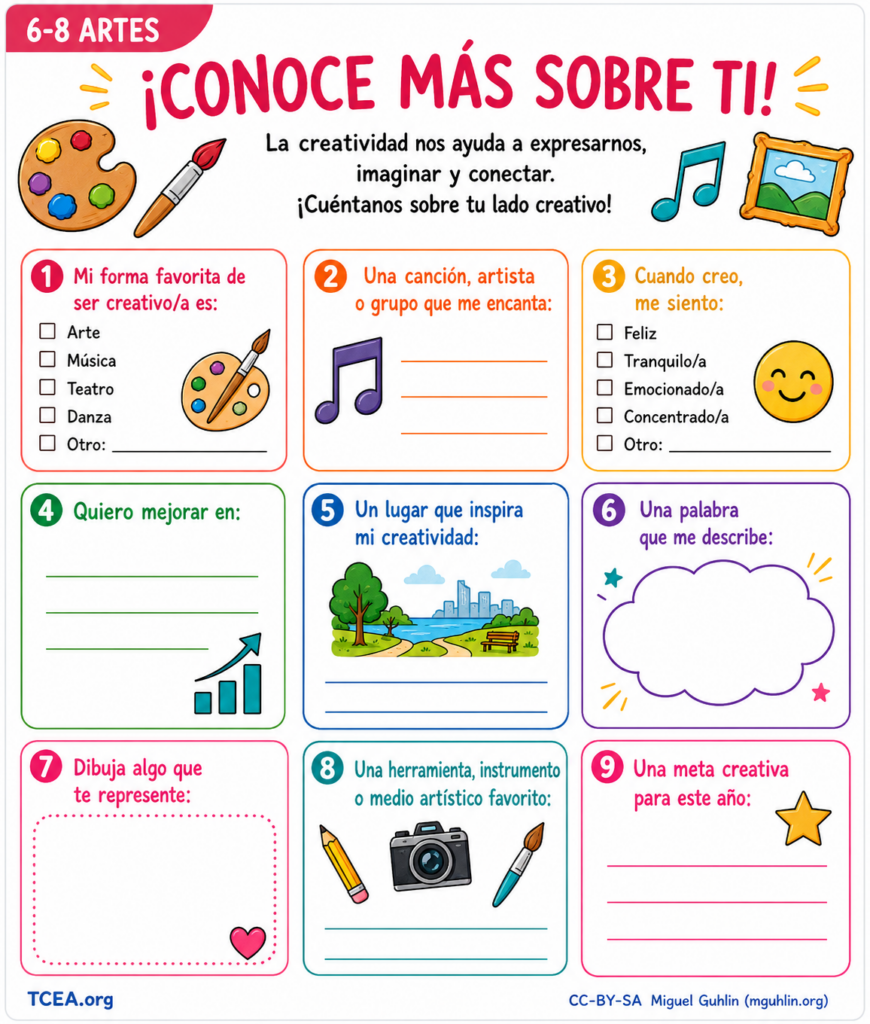
Getting information that improves teaching is the idea behind this new multilingual collection of subject-based interest inventories for grades K–12. Watch the short video tour below or keep reading.
One of the reasons I love this collection is that it is multilingual, making it a great fit for classroom with students who need copy in English, Spanish, or Vietnamese. Another reason is that these align to the Texas Essential Knowledge and Skills (TEKS) for various grade level bands, making them a potential entry ticket as way to do a quick pre-assessment of students, to use SOLO Taxonomy language, PreStructural awareness of topics. And, a final reason that those worried about screen time may welcome, this is a paper-based activity requiring students to handwrite their responses.
That said, there is no possible way that this 122 multilingual collection would exist without Gen AI chatbots working for a couple of hours to generate this content. Now that you have a big picture idea, let’s dig deeper into why Getting To Know You Icebreakers can be so powerful.
1. Build Connection Before Correction
As you know, students participate more readily when they believe the teacher knows and respects them. Names, interests, and experiences give you entry points for later conversations. Those moments can make feedback feel personal and classroom routines less anonymous.

2. Gather Information You Can Use
These are not random “favorite color” sheets. The prompts connect student interests to science, math, social studies, English language arts, and fine arts. Answers may suggest a better example, a relevant reading, a project topic, or a classroom role.
3. Welcome Students in More Than One Language
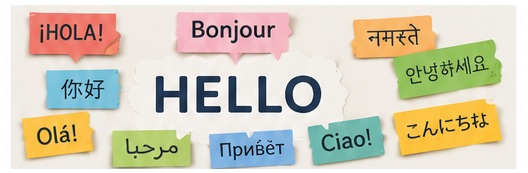
The collection includes English, Spanish, and Vietnamese versions. A home-language option can reduce the language load without reducing the thinking behind a response. It also tells students and families that their language belongs in the classroom.
4. Match the Activity to the Learner
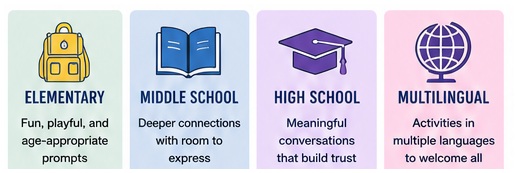
A kindergarten student and a high school senior should not receive the same worksheet with a few words swapped out. The collection changes prompts across grade bands and subjects, making the activity feel like a useful conversation rather than first-day paperwork.

5. Keep Using What You Learn
The research does not prove that every icebreaker works. One college study found stronger name recall and greater liking of classmates and instructors when a Getting to Know You routine continued beyond the first day. The value comes from reading the responses, referring back to them, and using what students shared.
Start with one inventory that fits your grade and subject. During the next week, use one response to adjust an example, recommend a book, or begin a conversation.
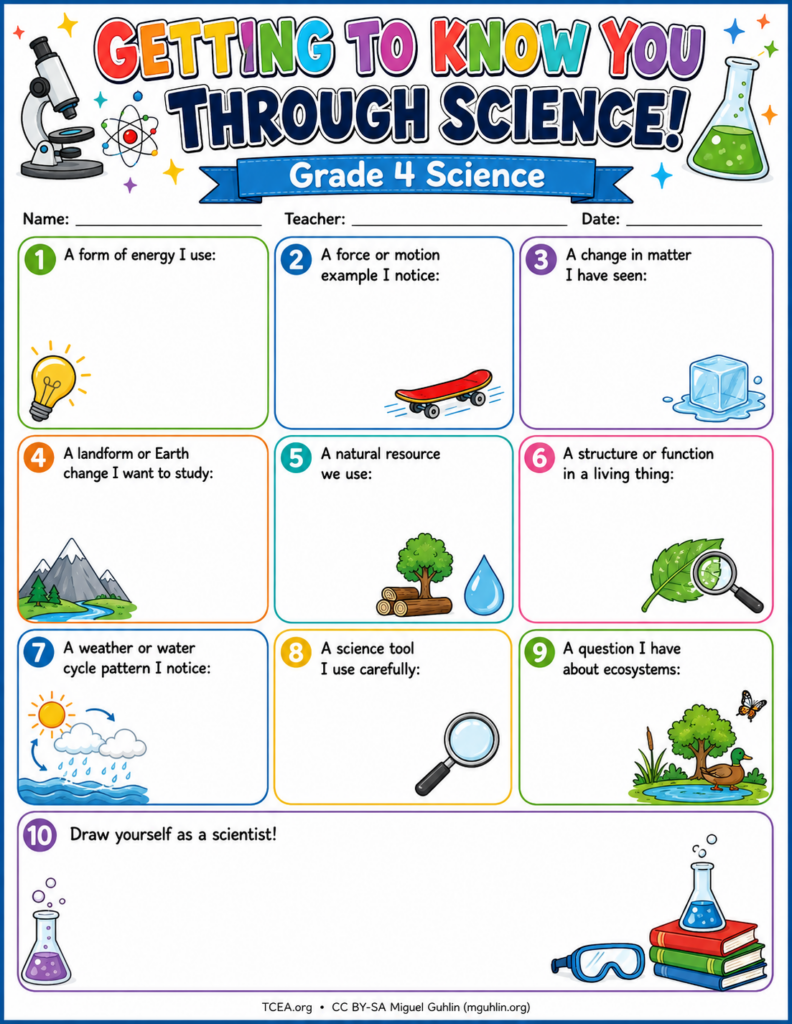
Explore the full Getting to Know You collection and research overview.