
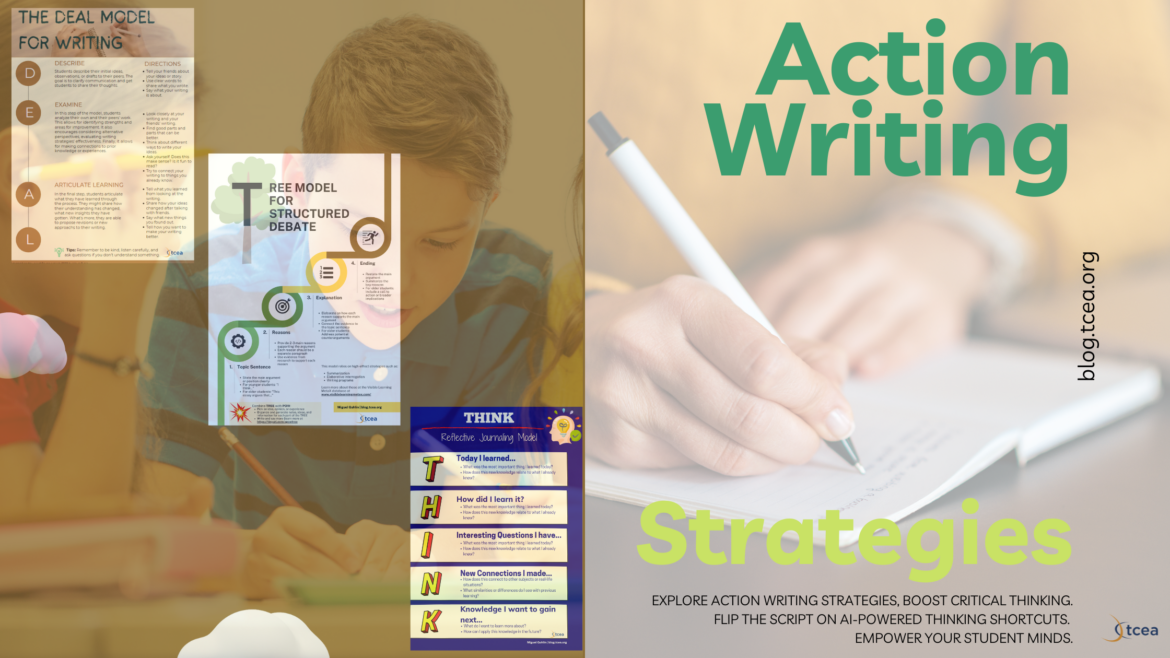
AI-powered writing threatens the status quo of classrooms. While AI literacy supersedes digital literacy, with teachers and students scrambling to learn how to use AI the right way, writing teachers are despairing. Using action writing strategies to teach critical thinking through writing. AI is seen as short-circuiting writing exercises intended to teach critical thinking. In this blog entry, see the first three of five research-based writing approaches that flip the tables on AI-powered, short-circuited critical thinking and writing.
1. Collaborative Writing Workshops
“Let’s get into a circle for group share,” I often told my third, fifth, and sixth grade students. Whether you call it a Writing Circle, the Writer’s Conference, collaboration and conversation are key to learning. That’s why strategies like Peer Tutoring (0.66 effect size), Cooperative Learning (effect size 0.53) are effective. What’s more, having Classroom Discussions (effect size of 0.82) about student writing are so powerful.
In collaborative writing workshops, students work in small groups to plan, draft, and revise their writing. This planning and conversation promotes critical thinking through peer feedback and discussion.What’s more, it empowers the teacher to listen in as students make thinking visible. It gives teachers the ability to listen to conversations students are having about their ideas, writing, and thinking.
Add a critical thinking model to the process students use when chatting with each other, you can elevate the level of thinking that goes on. Back in the days when tape recorders were easy to get, I would put one at every table (a group of 4 students) to record these conversations. Now, a digital device with an audio recorder app does the job as well.
Classroom Application
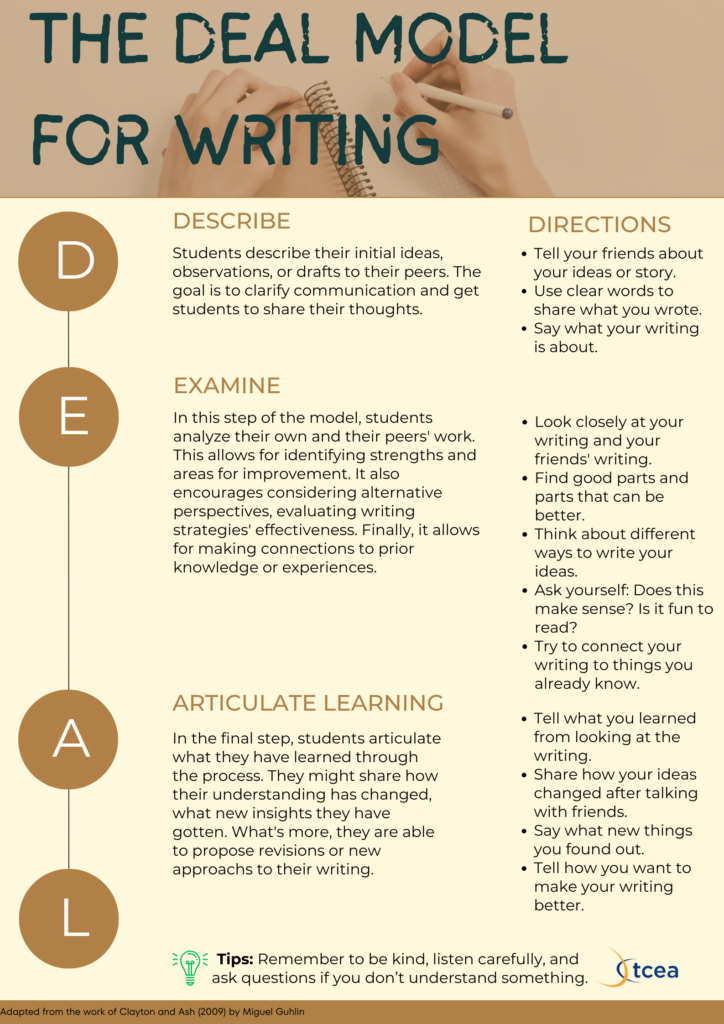
While organizing groups of three to four students to discuss their writing, consider using the DEAL model. The DEAL model encourages critical reflection and lends itself to use in the writing classroom.
As you might imagine, DEAL is an acronym that represents:
- Describe. Students describe their initial ideas, observations, or drafts to their peers. The goal is to clarify communication and get students to share their thoughts.
- Examine. In this step of the model, students analyze their own and their peers’ work. This allows for identifying strengths and areas for improvement. It also encourages considering alternative perspectives, evaluating writing strategies’ effectiveness. Finally, it allows for making connections to prior knowledge or experiences.
- Articulate Learning. In the final step, students articulate what they have learned through the process. They might share how their understanding has changed, what new insights they have gotten. What’s more, they are able to propose revisions or new approachs to their writing.
The DEAL model promotes metacognition, supports feedback through peer review and self-assessment. What’s more, it incorporates elements of Classroom Discussion strategy. I like to think of teachers “listening in” on student talk to gauge and heighten critical thinking, suggest writing strategies, and build connections.
Note: Clayton and Ash’s DEAL model can be found online in many spaces, adapted to various situations. You can see my take on it for writing workshop in the diagram below:
2. Structured Debate Blogs
As conflict-averse as I am, I have observed students love to argue with each other from an educated perspective. That is, arguing about opinions is one thing. Arguing the evidence is something else entirely. In structured debate, students write short, persuasive blog entries (or essays) after researching a particular viewpoint.
Note: Leah Cleary does a great job exploring structured debate in the classroom. She offers a debate schedule, discusses logical fallacies, and more. Read her blog entry.
The ensuing Classroom Discussion and Elaborative Interrogation (effect size of 0.59) requires students to commit information to memory. They have to use questions like Why? and How? to understand what their research means.
The main benefit? It enhances students analysis and evaluative thinking skills. This can be a boon in an AI age where content is easily generated and made available for uncritical consumption.
Classroom Application
Want to assist students in writing structure debate blogs or essays? Consider using the TREE model.
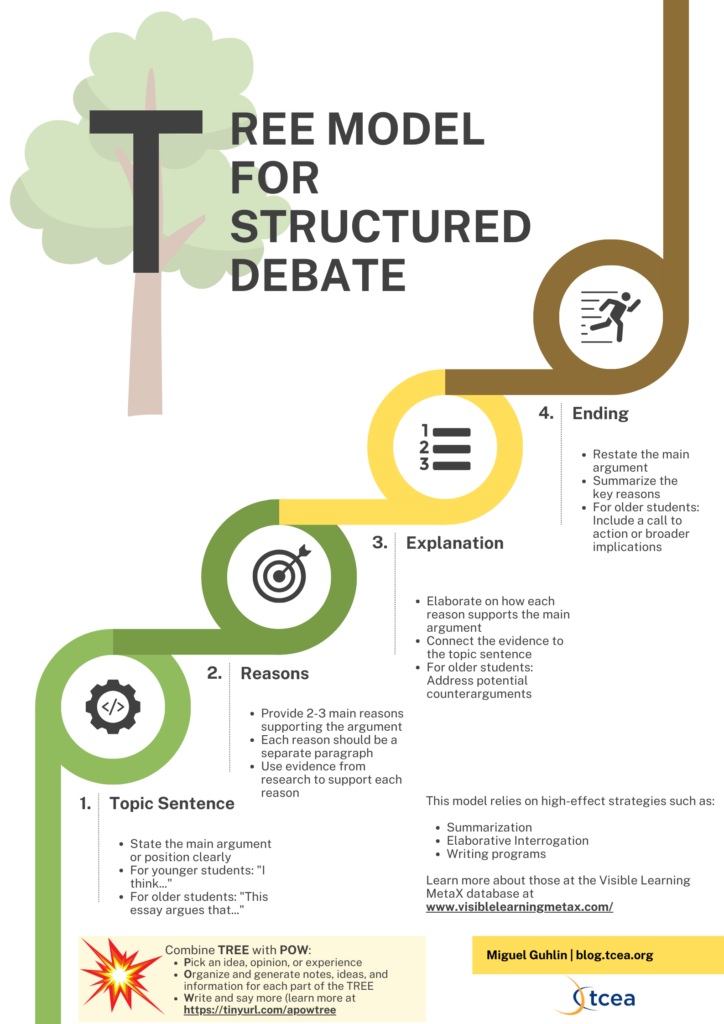
Some ideas for using the TREE model include:
- Grades 3-5. Keep things simple. Short topic sentences, basic reasoning, and restating the ending.
- Grades 6-8. Layer in complexity with more detailed explanations, topic sentences. Encourage them to address the implications of the evidence.
- Grades 9-12. Get nuanced, using multiple reasons, counter-arguments, and deeper exploration of implications.
3. Reflective Journaling with Metacognitive Prompts
Reflecting on learning, on anything, can be tough. What makes it tough can be the reflection, but more often, it’s the habit of reflection. Many of us reflect in a flash of insight, but that’s not really reflection. Reflection involves setting aside time in a consistent manner to ask ourselves questions about what and how we learned something.
Reflection is valuable since it relies on several strategies, including:
- Metacognitive Strategies (effect size 0.52) and Self Explanation (0.54)
- Self-verbalization and Self-questioning (effect size 0.58)
- Self-Judgement and Reflection (effect size of 0.81)
The main benefit of these strategies? Developing metacognitive self-awareness and critical reflection abilities and habits. Be sure to read the TCEA blog entries linked above on Self-Judgement and Reflection for more insights on how to use this in your own work and with students.
Classroom Application
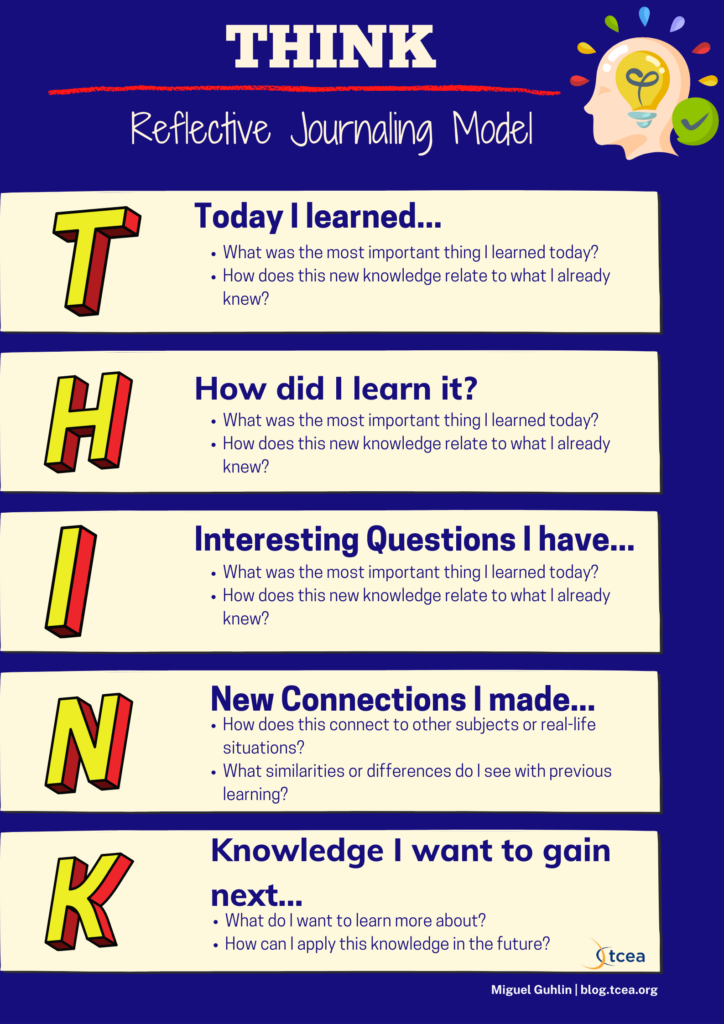
One easy to use model for reflective journaling might be the THINK model:
- T – Today I learned…how does this relate to what I already know?
- H – How did I learn it? What worked well? What didn’t?
- I – Interesting questions I have…what confused me? What am I still curious about?
- N – New connections I made…how does this connect to other situations or compare to previous learning?
- K – Knowledge I want to gain next…what do I want to learn more about and/or how could I apply it?
You can adapt THINK to use drawing or mind maps along with writing (including sketchnoting). Depending on grade level, encourage more detailed responses, critical thinking, and analysis. Explore how this works in real life.
Short-Circuiting AI Dullness
These action strategies leverage evidence-based instructional practices and brain-based learning principles. Use them to promote critical thinking skills through writing, without relying on AI tools. I see them as a way to sharpen student minds in the dulling doldrums of AI-powered writing. Be sure to check back for part two of this blog entry.
Get a Copy
Want a copy of the three models featured in this blog entry? Get a copy via Canva, and/or view full-size. All images, including the feature image, were created by the author and are freely shared to spur learning and inspire your creativity, AI-assisted or otherwise.