
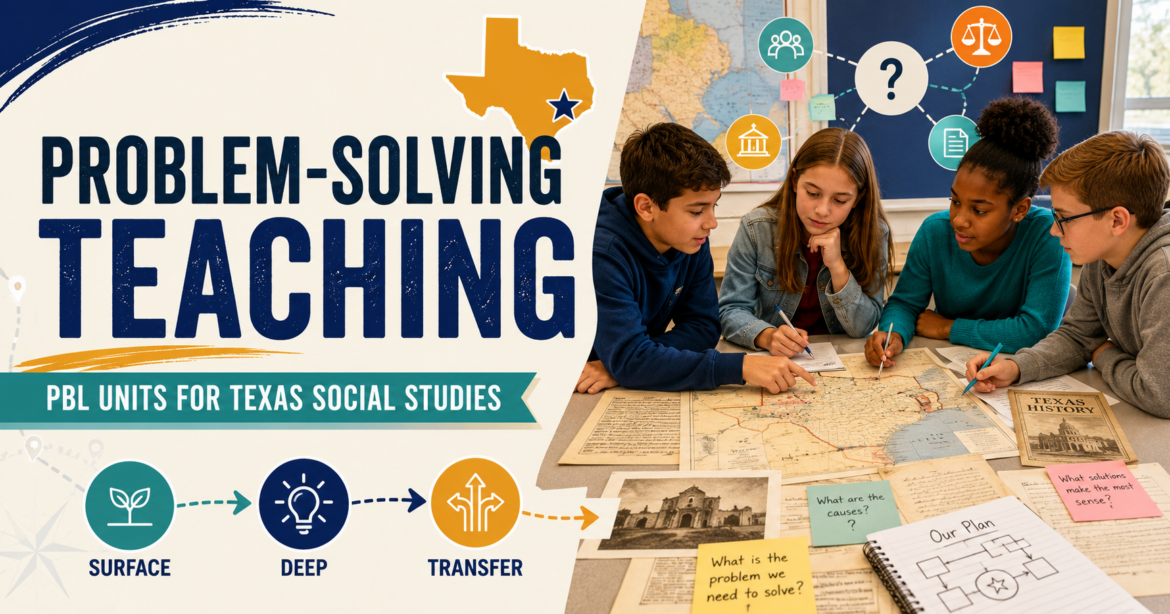
Wish you had access to PBL lessons aligned to the Texas TEKS for Social Studies? What if they also were available in seven languages, offered suggestions for Surface, Deep, and Transfer Learning activities (see interactive tool below) aligned to the strategies in Corwin Press’ Visible Learning MetaX database? If that’s a resource, you’ve been waiting for, then I have some news for you. This blog entry offers over 218 activities focused on surface, deep, and over 100 of them centered around transfer learning.
Problem-Based Learning and Problem-Solving Teaching
One of my favorite high-effect size strategies is Problem-Solving Teaching. It is best used during the Transfer Learning phase of learning, where students are applying what they have learned to new or novel situations. Only a few teachers, and of course, their students, ever get to work at the Transfer Learning stage.
Did You Know?
According to research, K-12 classrooms spend significantly more time on surface learning compared to transfer learning. Professor John Hattie suggests that around 90% of classroom teaching and learning focuses on surface knowledge and learning (source)…students are not getting enough opportunities to apply their knowledge to new contexts…
To address this issue, educators are encouraged to: Create a balance between surface, deep, and transfer learning (source); Focus on conceptual understanding to facilitate transfer to new situations (source); and, Implement strategies that promote transfer learning, such as comparing multiple contexts at the start of a unit (source).
I can only imagine that classroom Social Studies teachers may find it impossible given the situation on the ground. In the schools I worked, social studies was not taught or used as filler content for English/Language Arts and Reading, if they were so fortunate. That’s why I’m thrilled to offer this resource for educators in Texas schools.
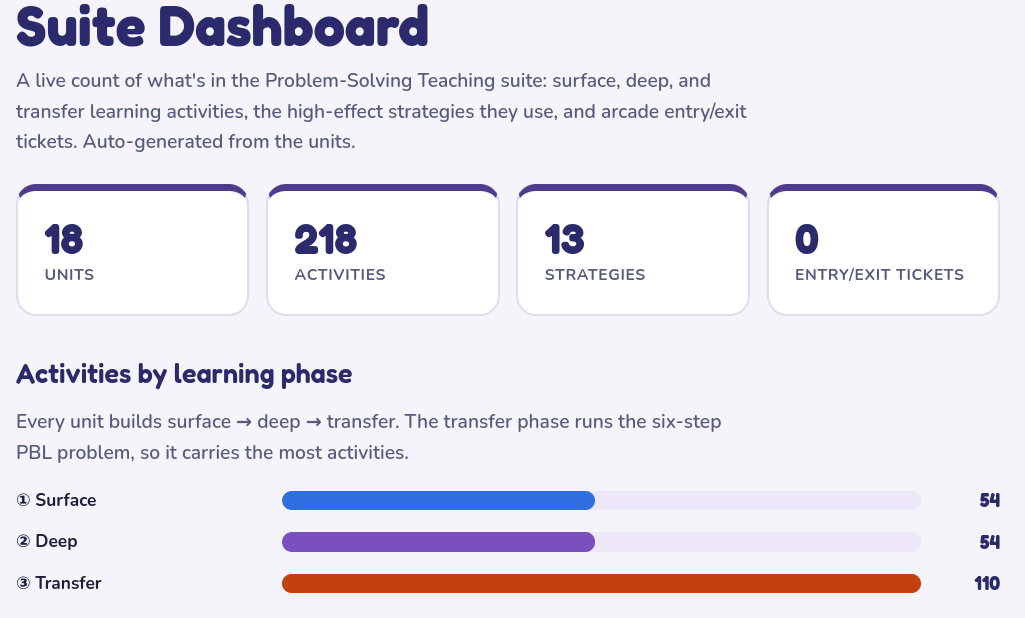
You can access the updated version of the PST Suite online
Meet the Problem
A student stares at a question about 1835 Texas and waits for the “right” answer to show up somewhere in the passage. Another student highlights half the page because everything looks important. A third student says, “Can’t you just tell us what happened?” You may have experienced all of these situations, as a student or educator.
History often gets handed to students as a finished story. Unless you’re studying current events (which can be controversial), dates are set, winners are known. Choices look obvious because the consequences have already happened. Unfortunately, this sends a message about the past. It’s boring. It’s over. I like to remember that is not how people lived it.
That is why I like the idea behind Problem-Solving Teaching, a set of ready-to-teach Problem-Based Learning units for Texas social studies in grades three through eight. These are not digital breakouts. There are no locks to crack. No code word. No “enter the four-digit answer and escape the room” moment, as fun as that can be.
Instead, students step into a real, messy problem as stakeholders. It takes me back to Dr. Bill Stepian’s ill-structured problems workshop back in the 1990s. It was my first contact with PBL, and I learned so much during the one-day workshop. I relied on that learning to help engineer two TCEA Convention Academies on PBL, as well as launch one in my work in a large urban school district.
As popular as PBL was, I didn’t learn the important lesson since John Hattie’s work had not been published yet. That lesson? That Problem-Based Learning is not an effective Surface Learning strategy, and not the most effective, Deep Learning strategy. PBL becomes Problem-Solving Teaching (PST) when it is employed for Transfer Learning.
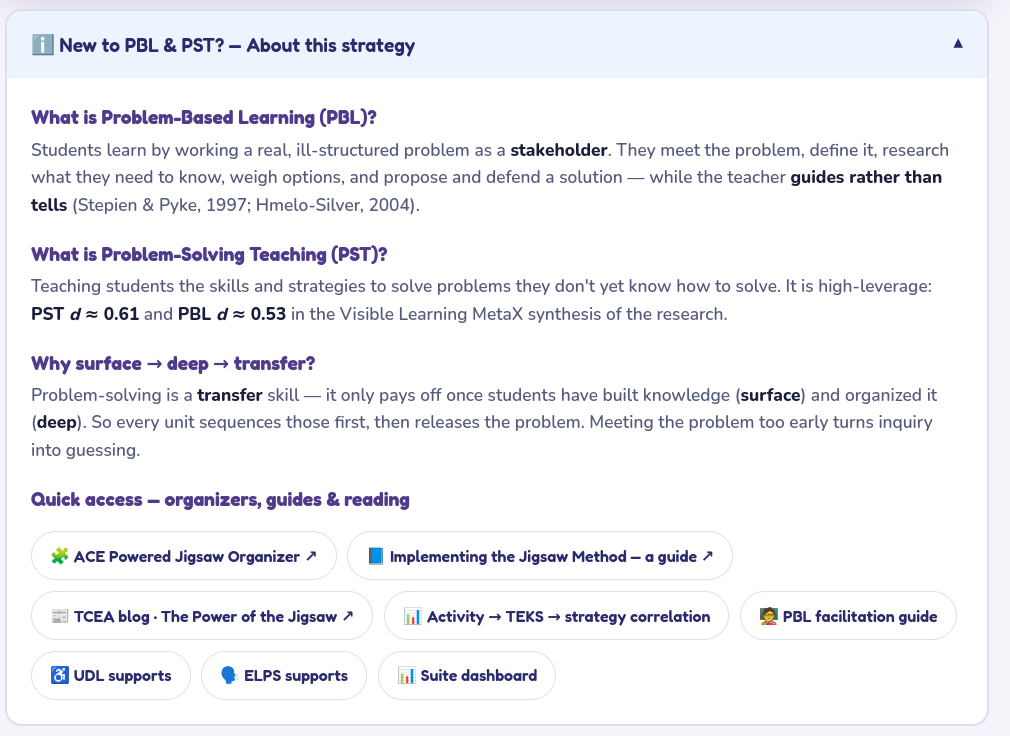
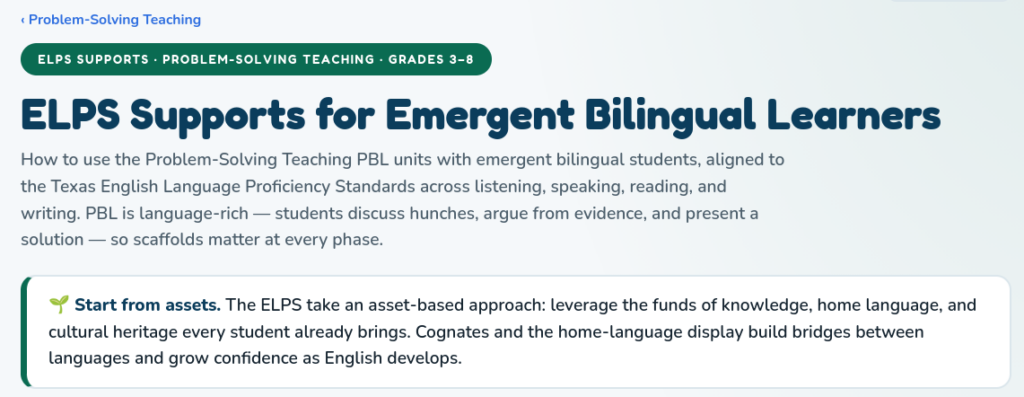
This guide appears in the PST Suite along with helpful tools, guides, UDL, ELPS supports, and more.
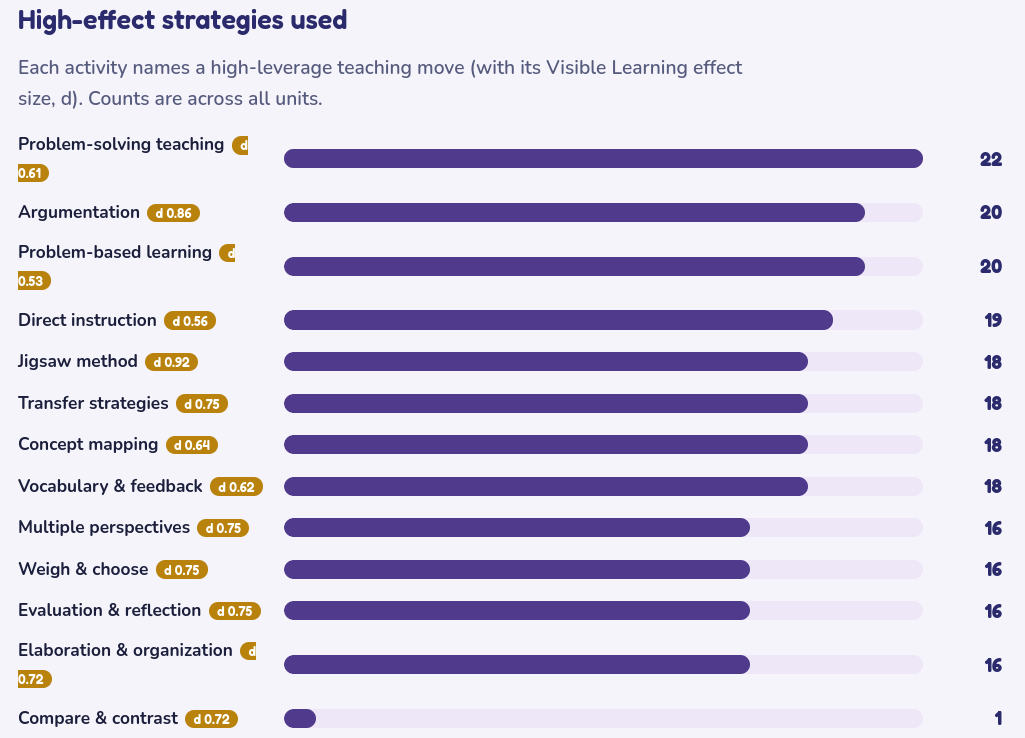
What’s more, the PST suite leverages high-effect size instructional strategies beyond the Jigsaw method and the TCEA ACE Framework:
The Problem Comes After the Knowledge
One thing that stands out about these units is the sequence. Each unit moves students from surface learning to deep learning, and only then into transfer. That matters more than it may sound.
When students meet a problem too early, they guess. They grab the first fact that sounds useful, make a claim, and hope the teacher smiles. That is not inquiry. That is academic improv, and not the good kind.
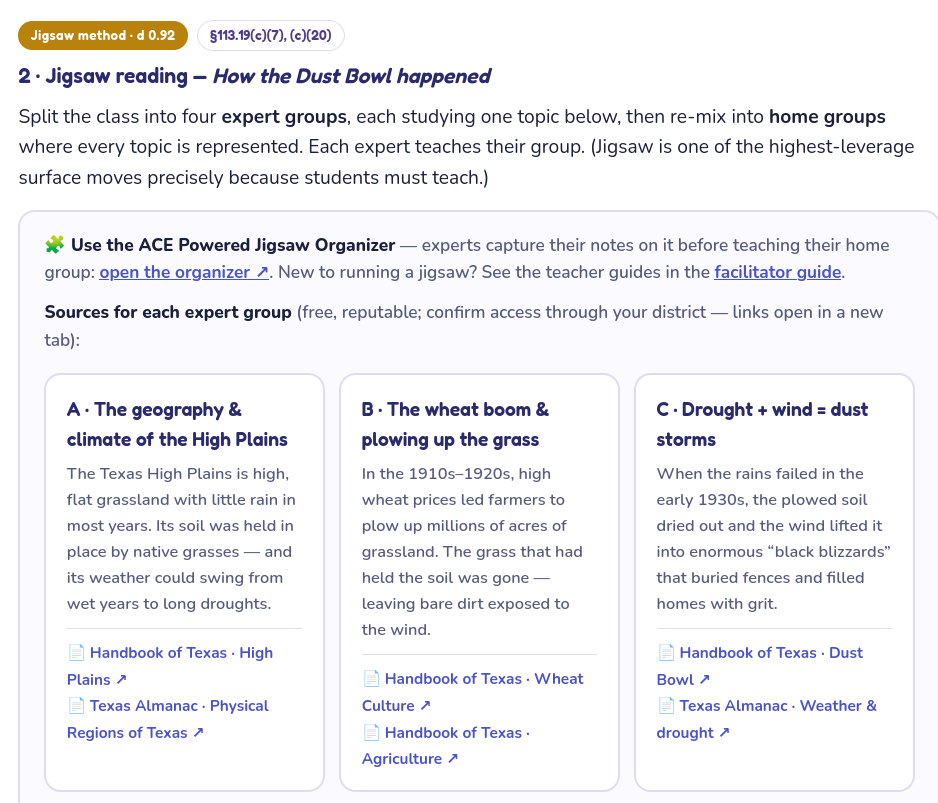
In PST, the transfer problem is gated behind the first two phases. Students first build enough knowledge to name what they are seeing. Then they connect ideas, weigh evidence, and organize their thinking. After that, they face the larger problem and decide what should happen next.
That design keeps PBL from becoming “go research this and make a poster.” You know the assignment…every time I walk into a school, I see these posters hanging on the wall. I hope the PST units available to you will help you find a different, research-based approach.
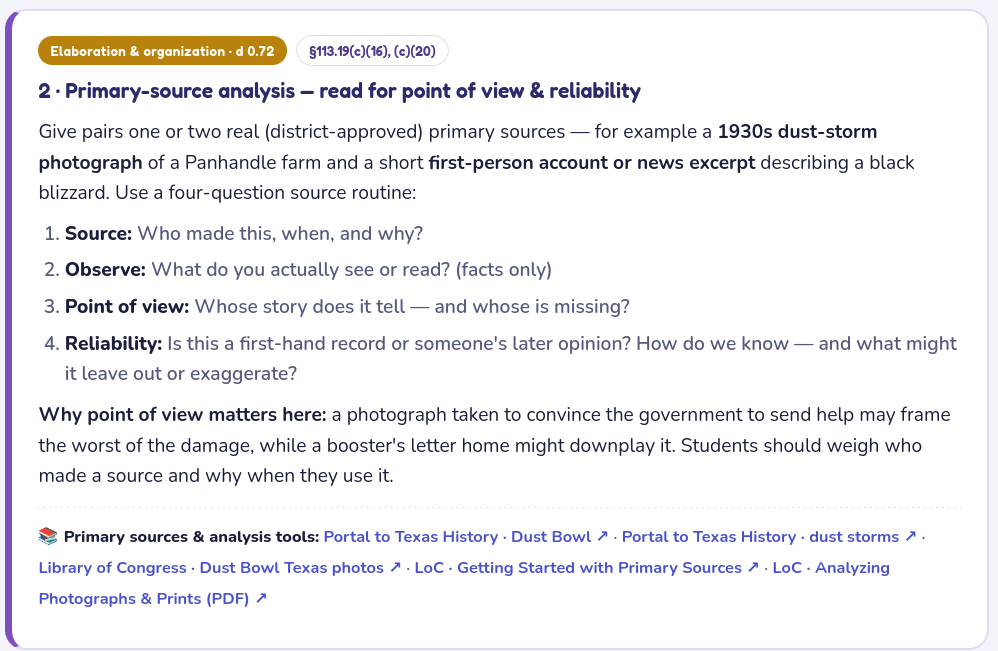
What Students Actually Do
Each grade includes three units aligned to the social studies TEKS. The topics are familiar, but the framing is where the work changes. Please note that high school units are under development.
Grade
Example unit
The decision students face
Grade 3
The Town Square Problem
What should a growing community do with an empty lot?
Grade 4
1835: What Should Our Family Do?
How should a Texas family respond as conflict grows?
Grade 5
A New Life, 1914
How should an immigrant family build a new life?
Grade 6
The Shared River
How should nations share a river that cannot meet every demand?
Grade 7
Spindletop, 1901
How should a town respond when oil changes everything?
Grade 8
Philadelphia, 1787
What compromises might build a government that lasts?
Those questions are better than “What year did this happen?” because they require students to use the facts, not just repeat them. They have to define the problem, consider choices, use evidence, and defend a solution.
Teacher Supports Are Built In
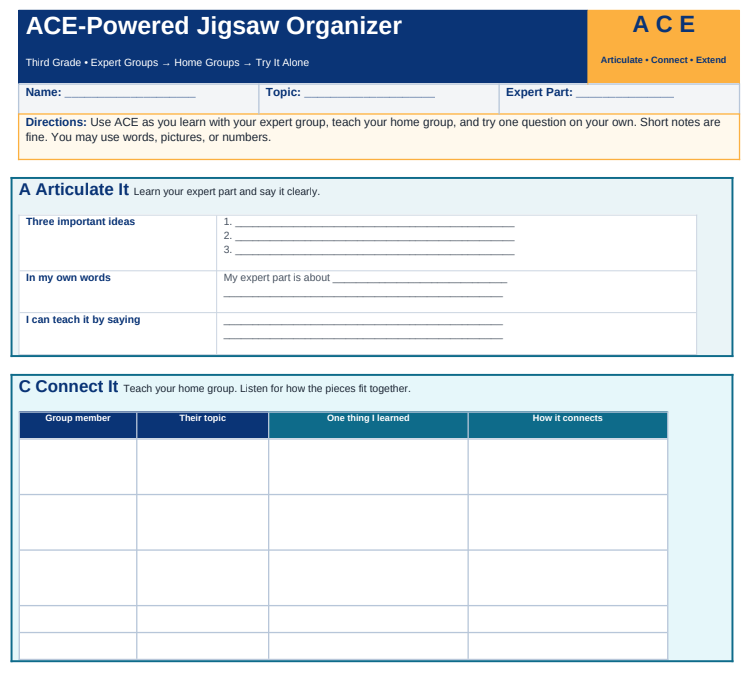
Each unit includes a hub, surface activities, deep activities, a transfer problem, a facilitator guide, and an assessment pack. That last part matters because PBL can get slippery fast. Without a guide and a rubric, a good classroom problem can turn into a loud discussion with uneven participation and one student doing most of the thinking.
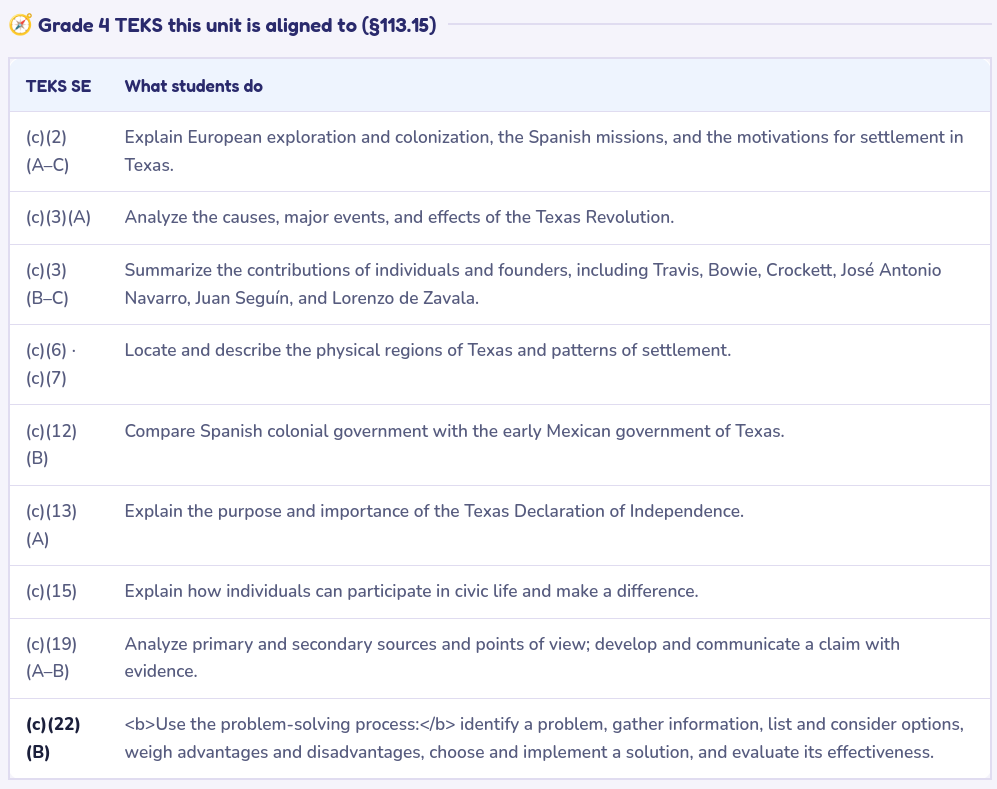
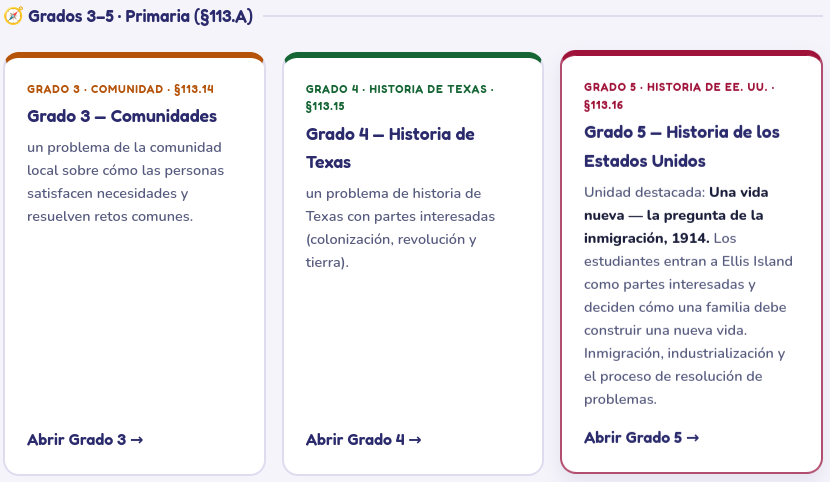
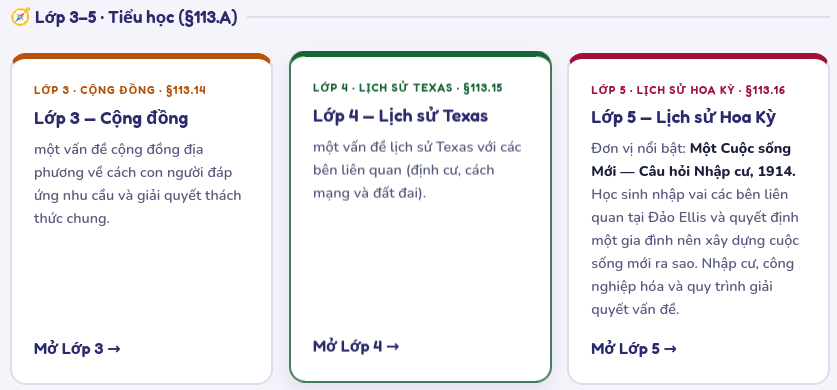
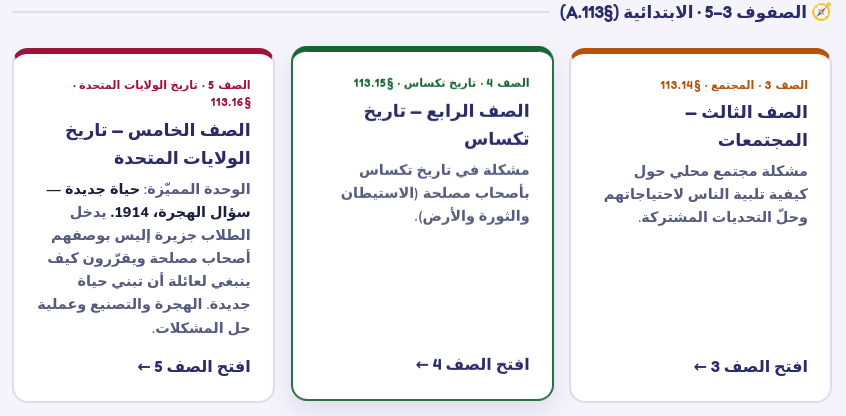
The site also includes UDL supports, ELPS supports, a PBL facilitation guide, and a standards and strategy correlation. The splash page and support pages are available in seven languages, with right-to-left support for Arabic and Urdu. The unit bodies are still English-first, but the multilingual structure is already in place.
That makes these units more usable in real classrooms, where “differentiate this” cannot mean “spend your entire weekend rebuilding it from scratch.”
Privacy Helps Adoption
Another practical detail: the site collects teacher or student data. Teachers and students can open the activity, think through the problem, and work together. For schools trying to balance useful digital resources with privacy expectations, avoid Gen AI backends, that can be important.
Start Small
Avoid trying to run all eighteen units (or however many there are available). Instead, pick one grade and unit. Use the surface and deep activities as written, then pay close attention to the transfer discussion. That is where you will hear whether students are just recalling information or actually using it. That discussion is critical to finding out what students understand, have misconceptions about, and/or need clarification on. Listen closely.
Problem-Solving Teaching works because it treats history as lived uncertainty. People in the past did not know how everything would turn out. Neither do students when the problem is framed well.
That is where the learning gets interesting. And, we all need learning to be more interesting in today’s schools.
Multi-lingual Support
And, of course, don’t forget that this is available in seven different languages common to Texas schools:
…and more.