
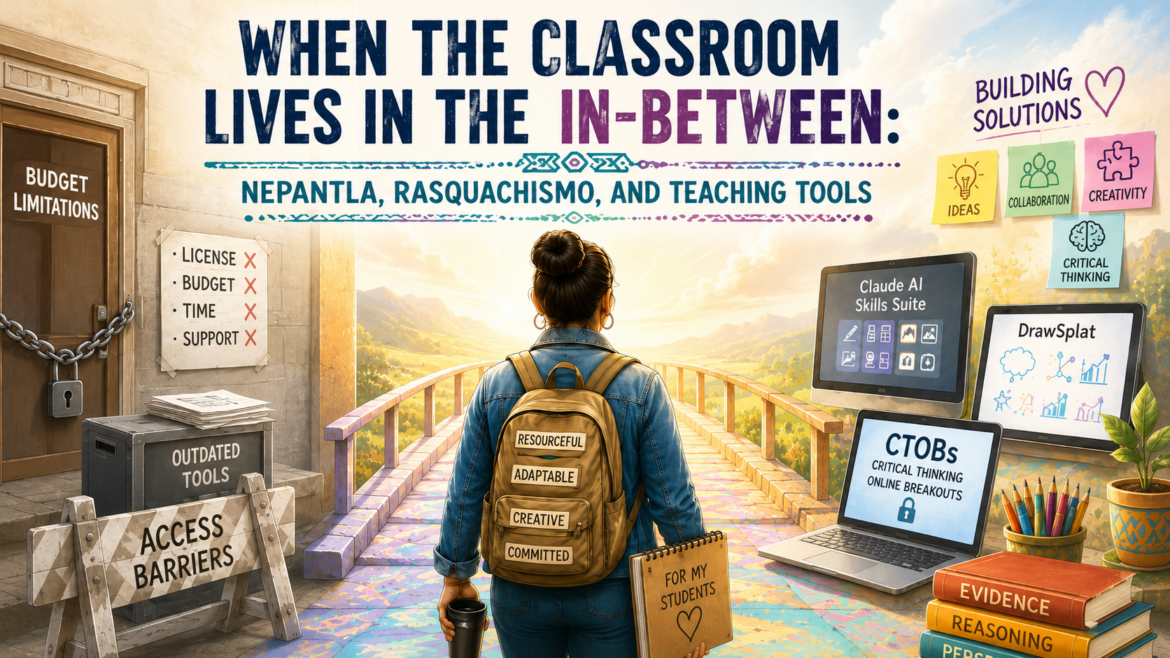
Somewhere in a school hallway, a teacher is trying to do tomorrow’s lesson with yesterday’s tools. The district license expired. The new platform needs student accounts. The free tool looks promising, right up until it asks for a login, a roster upload, and a privacy review that will take six weeks. Haven’t we all been there? With slashed budgets, school districts barely able to cover healthcare costs for educators, which subscriptions do you slash first?
Note: This blog entry also is being presented at the LACHD 2026 Conference in San Antonio, Texas. That event takes place September 8-10, 2026. Access the presentation resources online.
I have been in that hallway. I’ve taken advantage of free, open source tools to try to close the gap. Until recently, I had no way to make my own tools to meet the needs I had in my classroom or my work. Gen AI vibe-coding made that possible. It allowed me step confidently into the gap. That gap, that liminal space is where good teaching ideas meet decreasing funding, aging devices, little to no guidance, and the quiet understanding that the lesson still has to happen. You simply have to make do with what you have. That space has a name. It is nepantla. And, if you’ve had to find a solution for someone that’s a little string, duck tape, and chewing gum, you are a nepantlera.
Nepantleras: people who facilitate passage between worlds, who build bridges and travel back and forth across them without fully belonging to either side.
The Space Between Systems
Gloria Anzaldúa used nepantla, a Nahuatl word often understood as “in-between,” to describe the threshold space between worlds. It is not a comfortable middle ground. It is unstable. It shifts under your feet. You are no longer fully in one world, but you have not arrived safely in another.
That feels familiar in schools right now.
Gen AI has reached education through two main doors. One door is enterprise adoption: district contracts, vendor demos, procurement cycles, approved platforms, and per-seat pricing. The other door is individual use: a teacher with a free chatbot account, a pile of prompts, and no real support.
Many educators, especially in under-resourced schools, fit cleanly through neither door.
The enterprise path assumes money, time, and staffing. The individual path assumes teachers have enough hours to design, test, revise, and explain everything themselves. That leaves many classrooms in the middle. Not outside technology, exactly. Not inside the polished vendor version either.
That is nepantla.
Rasquachismo Names the Work
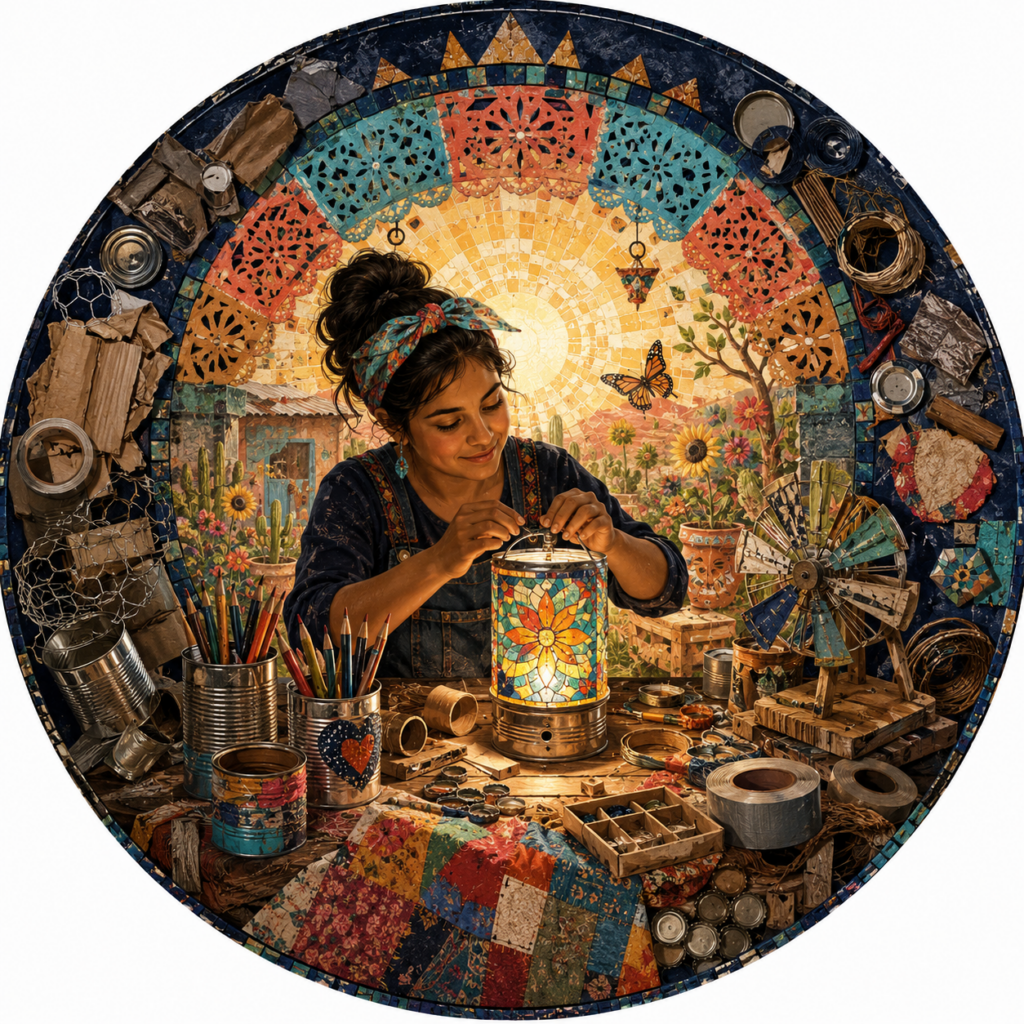
If nepantla names the space, rasquachismo names the way many educators survive inside it.
Rasquachismo, as Tomás Ybarra-Frausto described it, is the Chicano sensibility of making the most from the least. It is not “cheap” in the lazy sense. It is resourceful, inventive, and practical. It carries dignity because it refuses to wait for perfect conditions before making something useful.
That is the spirit behind instructional rasquachismo: building teaching tools from what is available, for educators who cannot wait for the official solution to arrive.
This is where the poster presentation, “Instructional Rasquachismo: Building AI-Powered Teaching Tools at the Margins of Budget and Access,” fits. The project began with a simple question: What can you build for teachers who need useful tools now, without asking them for a license, login, database, or new hardware?
The answer is not one tool. It is a small collection of tools that live in the in-between.
Three Examples of Third-Space Infrastructure
The work takes several forms. The first is the Claude AI Skills Suite, a set of free, open-access instructional design tools built as static web apps. The tools include a lesson plan architect, rubric builder, blog writer, infographic designer, slide deck builder, diagram generator, and Draw.io XML builder.
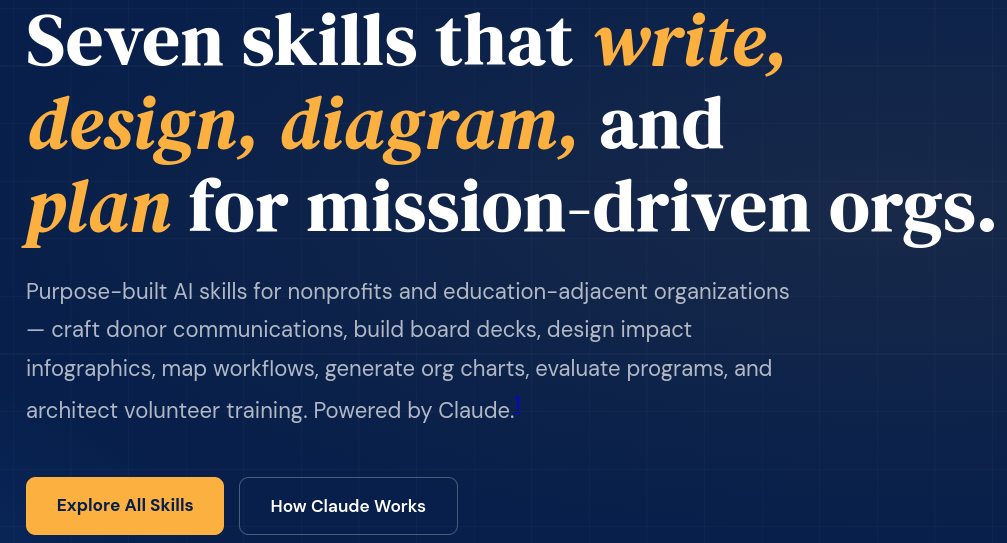
They are more structured than a loose prompt copied into a chatbot. They are less locked down than a vendor platform. That position is intentional.
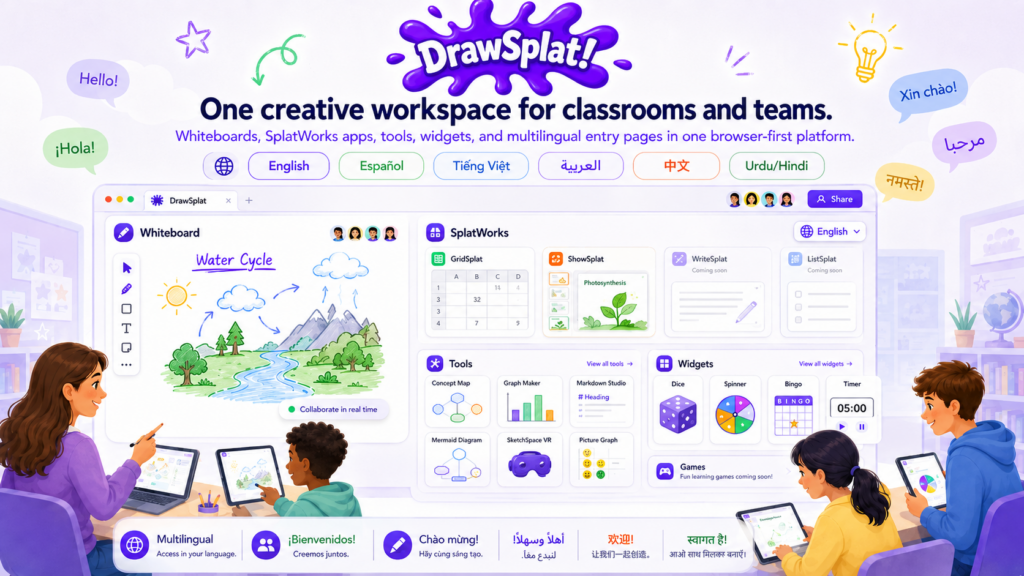
The second example is DrawSplat. It began as a browser-first interactive whiteboard and has grown into a set of classroom creation spaces: whiteboards, concept maps, graph makers, picture graphs, classroom widgets, SplatWorks apps, and other visual tools. Students are not being asked to let Gen AI do the thinking for them. They are drawing, mapping, sorting, labeling, explaining, and revising. A big reason for that is that DrawSplat has NO Gen AI backend features and does not collect any data.
The third example is Critical Thinking Online Breakouts (CTOBs). These are browser-based reasoning puzzles where students open clues, weigh evidence, and crack locks. The important move is not the lock itself. It is the thinking before the lock: Which clue helps? Which clue is true but off-topic? What evidence actually supports the answer?
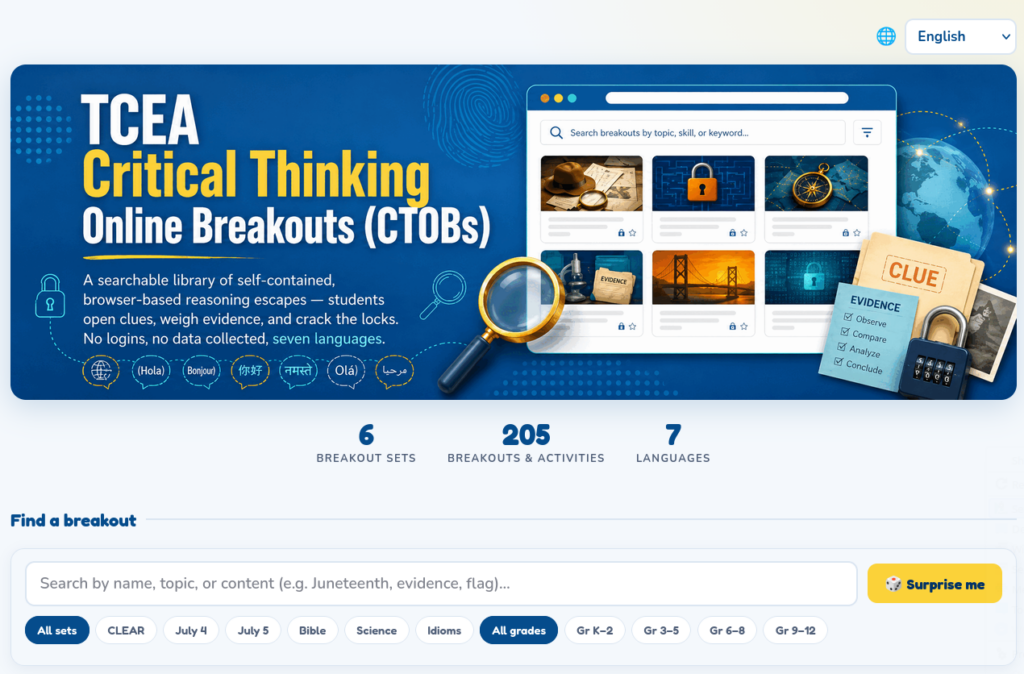
That makes CTOBs a useful match for the Gen AI moment. Students need practice questioning claims, sorting evidence, and explaining why an answer holds up. A chatbot can hand them a clean response. A breakout makes them defend one.
Tool or resource
What it does
Why it fits nepantla
Claude AI Skills Suite
Helps teachers generate structured lesson, rubric, writing, visual, slide, diagram, and Draw.io outputs
Sits between raw chatbot prompting and vendor platforms
DrawSplat
Gives students and teachers browser-based spaces for visual thinking, creation, and classroom work
Keeps the task centered on student making, not platform dependency
CTOBs
Gives students short reasoning puzzles with clues, decoys, and locks
Builds critical thinking without accounts, rosters, or a heavy tech lift
No Login Is a Design Choice
A login is not just a login.
In schools, a login often means student data, parent concerns, vendor review, accessibility questions, rostering, password support, and another system for teachers to explain. Sometimes that is necessary. Many times, it is friction disguised as modernization.
Static, browser-based tools make a different bet. They ask: What can happen without collecting anything?
That design choice matters. A teacher can open a CTOB on a Chromebook and use it as a bellringer. A student can build a concept map in DrawSplat without waiting for an account. A facilitator can use a static tool in a workshop without becoming the unofficial help desk for password resets.
This is not anti-technology. It is technology with a smaller footprint.
And yes, there are tradeoffs. Browser-first tools do not always have the persistence, analytics, or management controls of enterprise platforms. That is the point of being honest about the space. Nepantla is not magic. It is the unstable middle where you choose what matters most for the work at hand.
The Educator as Nepantlera
Anzaldúa also wrote about nepantleras, people who move between worlds and help others cross. That may be the best description I know for many educators right now.
Teachers are being asked to cross between the world of frontier Gen AI and the world of real classrooms. One side speaks in model updates, tokens, agents, and enterprise controls. The other side has fire drills, substitute shortages, multilingual learners, blocked websites, and three minutes before the bell rings.
The teacher translates between those worlds.
So does the instructional coach. So does the librarian. So does the district technology leader trying to say yes to useful tools and no to unnecessary risk.
These tools do not remove that bridge work. They respect it. They lower the cost of crossing.
What This Means for Schools
If you are supporting teachers, the lesson is not “use these exact tools and you are done.” That would be too easy, and also not true.
The better lesson is this: build and choose tools that match the realities of the classroom you actually serve.
A useful third-space tool should pass a few tests:
- Does it work on common school devices?
- Can a teacher use it without a long setup process?
- Does it avoid collecting student data when collection is not needed?
- Does it support multilingual classrooms as normal, not as an afterthought?
- Does it make student thinking more visible?
- Can the teacher explain its purpose in one sentence?
That last one is underrated. If a tool requires a thirty-minute defense before anyone understands why it exists, it may not survive the school day.
Incompleteness Is Not Always Failure
One part of Anzaldúa’s nepantla that I keep coming back to is its unfinishedness. The space is always shifting. The work is never completely settled.
That describes these tools too. The Claude AI Skills Suite, DrawSplat, and CTOBs are not final answers. They are working responses. They change because classrooms change, teacher feedback changes, Gen AI changes, and the constraints around school technology change.
In a vendor brochure, that might sound like a weakness.
In nepantla, it is closer to the truth.
The under-resourced classroom does not need another perfect platform arriving from somewhere else with a sales cycle attached. It needs useful infrastructure that can be picked up, adapted, questioned, improved, and shared.
That is where rasquachismo and nepantla meet. One tells you how to build when resources are thin. The other tells you where that building happens: in the unsettled space between systems.
And for many educators, that is not theory. That is Tuesday.
Try one tool this week: open DrawSplat for a visual thinking task, or run a Critical Thinking Online Breakout as a short reasoning warm-up. Then ask students what clue, drawing, map, or explanation helped them think better.
References
Anzaldúa, G. E. (1987). Borderlands/La Frontera: The new mestiza. Aunt Lute Books.
Anzaldúa, G. E. (2002). (Un)natural bridges, (un)safe spaces. In G. E. Anzaldúa and A. Keating (Eds.), This bridge we call home: Radical visions for transformation (pp. 1–5). Routledge.
Anzaldúa, G. E. (2009). The Gloria Anzaldúa reader (A. Keating, Ed.). Duke University Press.
Anzaldúa, G. E. (2015). Light in the dark/Luz en lo oscuro: Rewriting identity, spirituality, reality (A. Keating, Ed.). Duke University Press.
Keating, A. (2006). From borderlands and new mestizas to nepantlas and nepantleras: Anzaldúan theories for social change. Human Architecture: Journal of the Sociology of Self-Knowledge, 4(3), 5–16.
Ybarra-Frausto, T. (1989). Rasquachismo: A Chicano sensibility. In Chicano aesthetics: Rasquachismo (pp. 5–8). MARS, Movimiento Artístico del Rio Salado.