The short version
What happens when a book gets challenged, restricted, or banned? Explore **Contraband**, a free collection of learning rooms, posters, and prompts that help students investigate challenged books.
As a classroom teacher who can read books in two languages, from two different homelands, I often find myself bridging the gap between cultures and ideas. In that gap, it’s fascinating to see how mono-cultural perspectives view other perspectives.
One way that shows up is in how many of the books Americans read in school have found their way onto banned book lists. It’s a rite of passage for many authors to see their books end up on bookstore tables (been to Barnes and Noble lately?), labeled with one word.
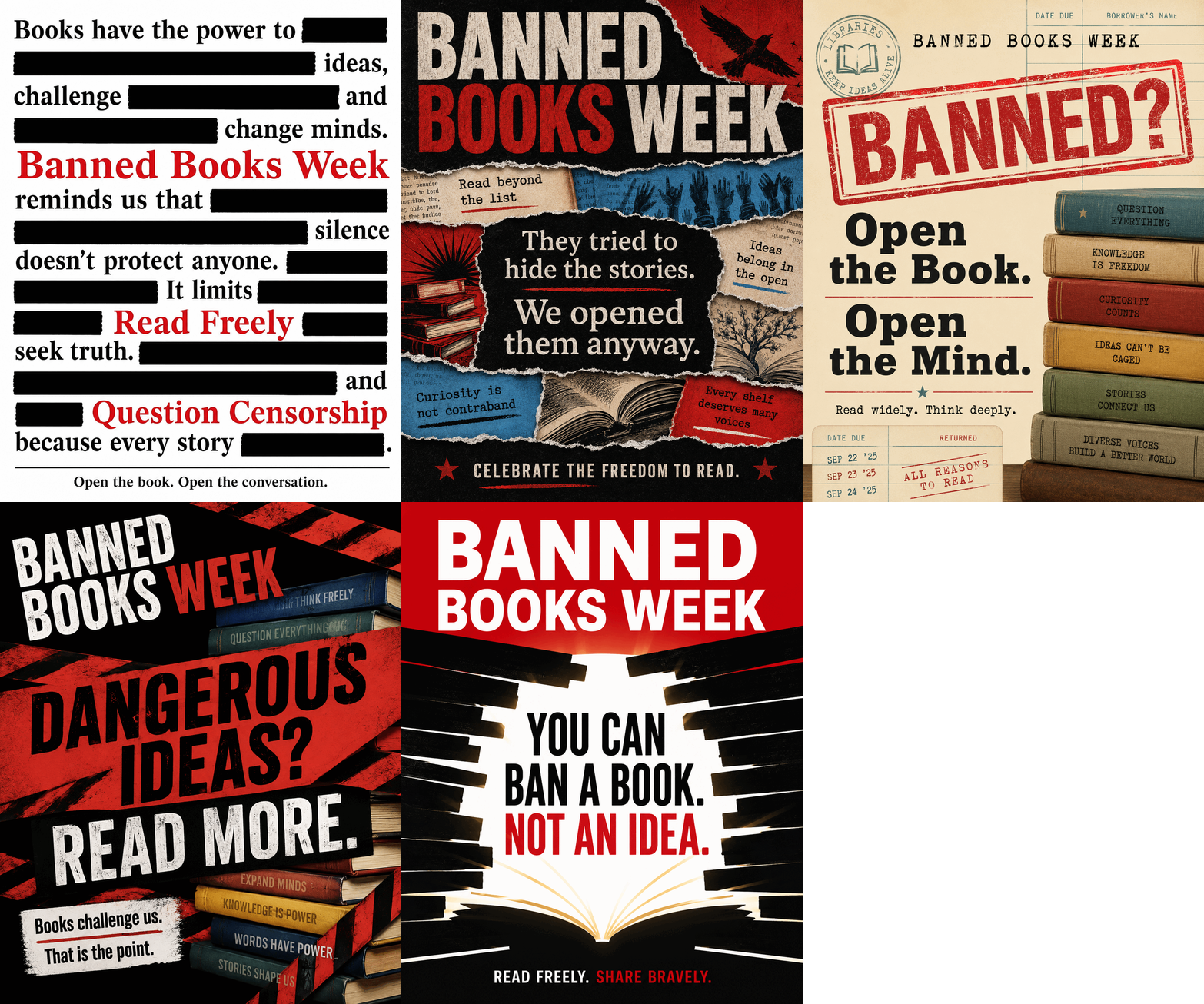
Or, walk into a school library during Banned Books Week and you may see familiar titles wrapped in caution tape, hidden behind paper bars, or stamped with the word “BANNED.”
Students notice. Teachers notice. Who wouldn’t notice?
“Who controls the past controls the future. Who controls the present controls the past.”
— George Orwell, 1984
“Why would anyone want to stop people from reading a book?” some may ask.
The reasons vary, but the question itself is a very American question. It’s a freedom many veterans of foreign wars fought to be able to protect, including my own father. But fighting for that freedom to read, fREADom , started long before he put his body in harm’s way, earning a Bronze Star with “V” for Valor.
It betrays a belief that Americans cannot think for themselves.
From pamphlets passed around during the American Revolution to abolitionist newspapers, suffrage publications, civil rights reporting, and books that challenged accepted ideas, American history is filled with arguments over who gets to speak, what can be printed, and which ideas deserve a hearing.
We have never agreed on all those ideas . That may be part of what makes the American experiment work.
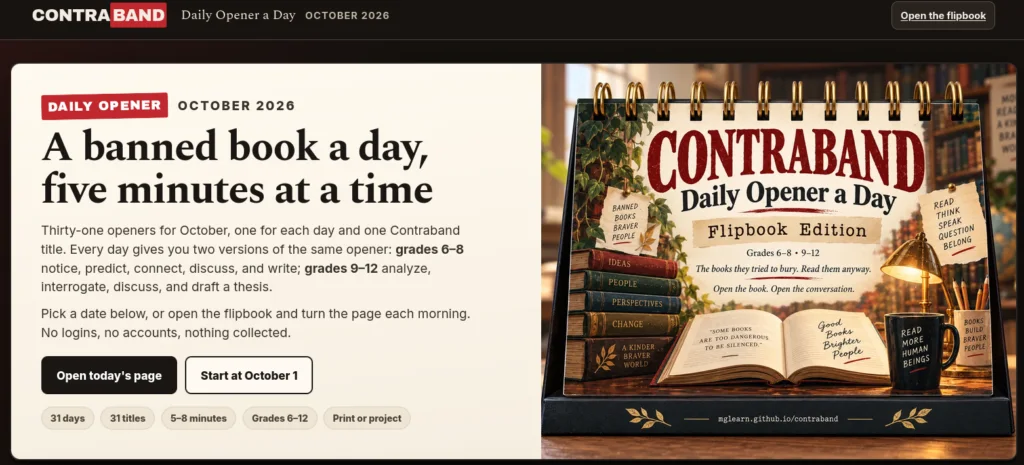
Explore the Daily Opener: Flipbook Edition of Contraband for every day in October 2026
Freedom Includes Ideas You Dislike
Americans have censored abolitionists, prosecuted dissenters, suppressed political publications, challenged books, and fought over which religious and political ideas belonged in public life.
Other Americans pushed back.
Those conflicts give students something worth studying. Freedom means more when it protects the person whose ideas you dislike as well as the person whose ideas you share.
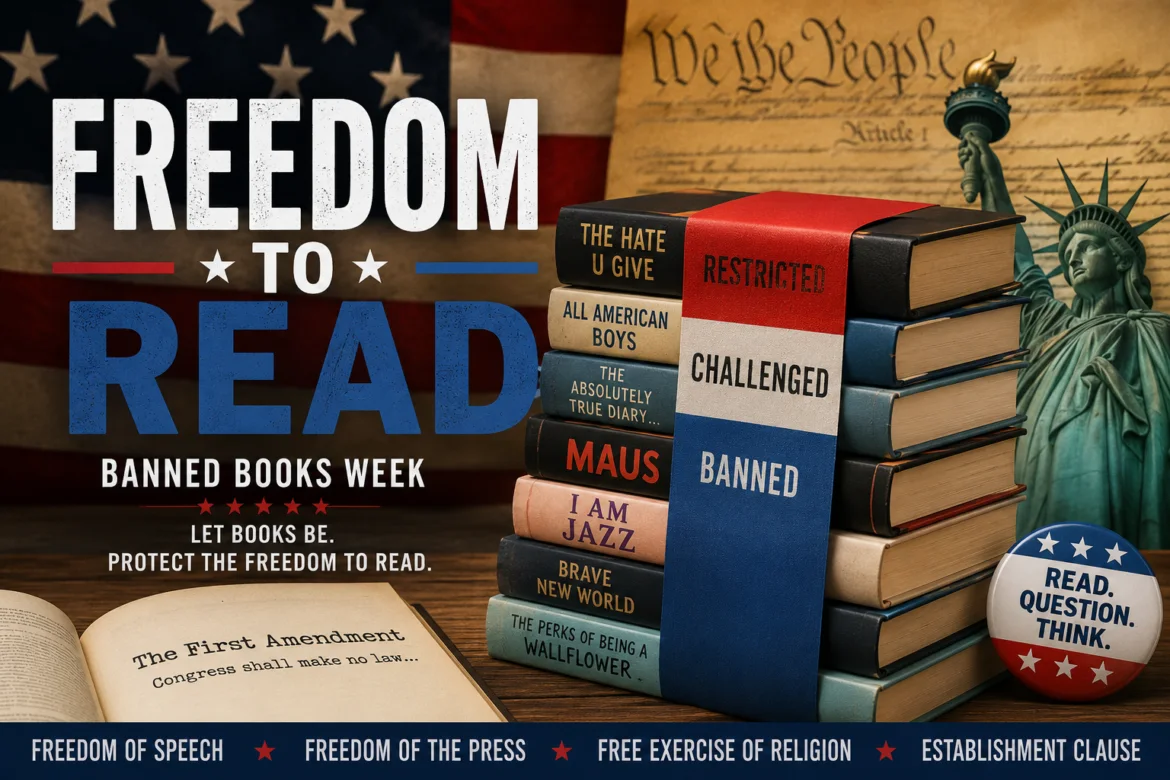
Banned Books Week 2026 takes place October 4–10 under the theme, “Let Books Be. Protect the Freedom to Read.”
“Books won’t stay banned. They won’t burn. Ideas won’t go to jail. In the long run of history, the censor and the inquisitor have always lost. The only sure weapon against bad ideas is better ideas.”
— Alfred Whitney Griswold, Essays on Education
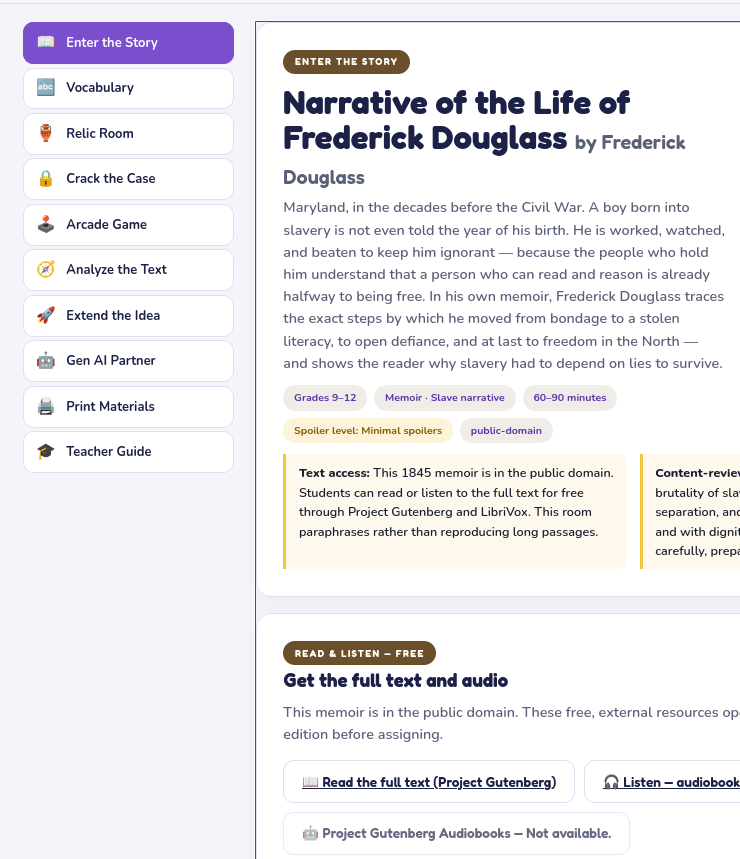
Open the Contraband
That thinking led me to build Contraband, a free collection of learning rooms for grades six through twelve built around books that have faced documented challenges or removals.
Students can investigate vocabulary, examine evidence, discuss difficult ideas, make connections, and complete extension activities. Instead of stopping at “this book was challenged,” they can ask why, who objected, what ideas caused concern, and what the controversy tells us about America.
Contraband does not provide unauthorized copies of books. Students get the book through a classroom, school library, public library, bookstore, or another lawful source.
What Contraband provides is a place to think, reflect, and explore the ideas in banned, as well as copyrighted, books.
Get the Book
Found a title in Contraband that you want to read?
Start with your school or local public library. Teens and young adults may also qualify for free digital library cards through Books Unbanned, which connects readers with participating public libraries offering access to ebooks and audiobooks.
Programs have different age and residency requirements, so check the current options before applying. For younger readers, ask your local public library about youth library cards and parent or guardian requirements.
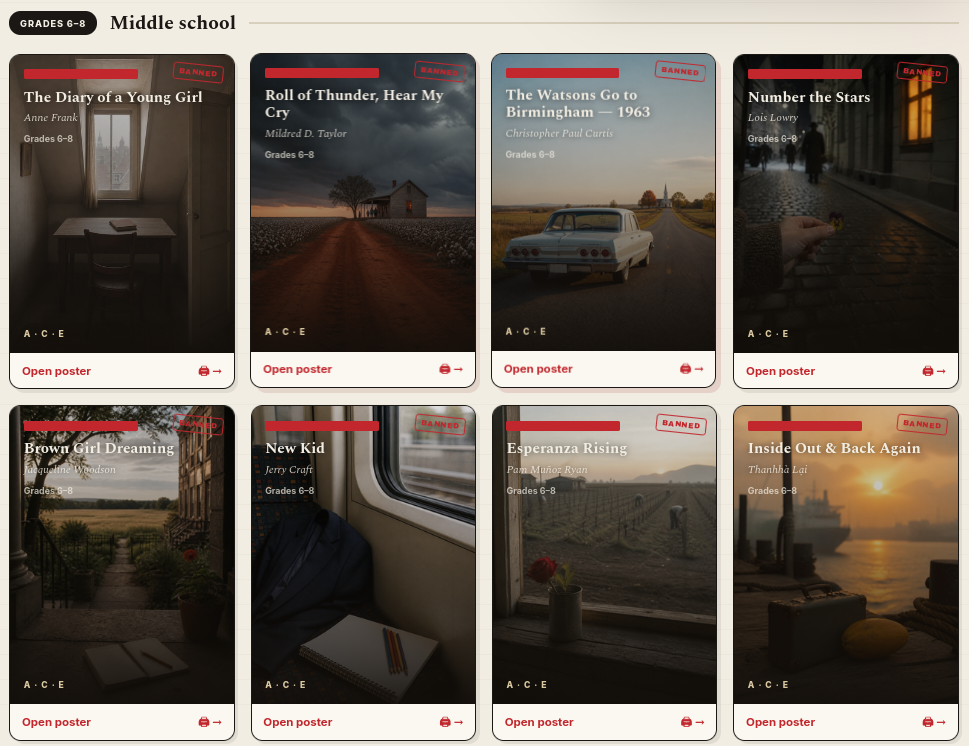
ACE Posters
The ACE Posters offer another entry point. Each print-ready poster includes a short plot summary and an ACE prompt built around Articulate, Connect, and Extend.
Free, print-ready posters for every book in the library—each one carrying a short plot summary and an ACE prompt (Articulate · Connect · Extend), so it’s a thinking tool, not just décor. Click any poster, then print or save it as a PDF.
A poster might get a student to notice a book. An ACE prompt gives that student something to think about once they open it.
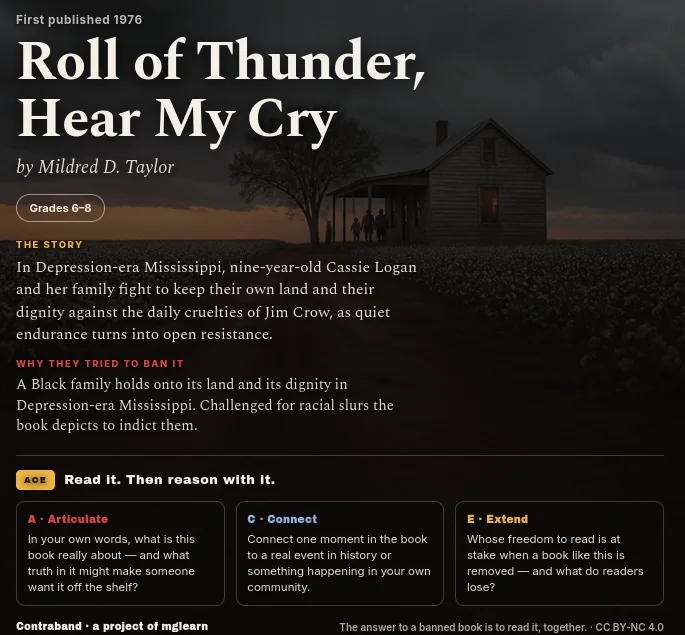
A sample ACE poster for a book title
Keep Reading
Contraband is one doorway. There are several others worth bookmarking:
- School Library Journal offers ongoing reporting and resources about book challenges, intellectual freedom, school libraries, and censorship.
- Freadom Books shares challenged-book resources and works to make restricted books available in communities through projects such as Little Free Libraries.
- The American Library Association maintains Banned Books Week resources, censorship data, frequently challenged book lists, graphics, and information about intellectual freedom.
And if a student cannot find a challenged title locally, check Books Unbanned. Participating public libraries offer qualifying teens and young adults digital access to ebooks and audiobooks.
Of course, you can always find books online or in brick-and-mortar stores.
“It’s not just the books under fire now that worry me. It is the books that will never be written.”
— Judy Blume
Red, White, Blue, and Read
The American story is not one long agreement about what everyone should believe. Rather, it is an argument about liberty, power, religion, rights, responsibility, and whose voices get heard.
So put up the red, white, and blue. Read the First Amendment. Talk about freedom of speech and freedom of the press.
Of course, there’s always more to learn.
Study moments when Americans protected those freedoms and moments when they failed to. Encourage students to read widely, then apply critical thinking to it, question it, challenge it, defend it, or disagree with it.
Being free to do that is pretty American.