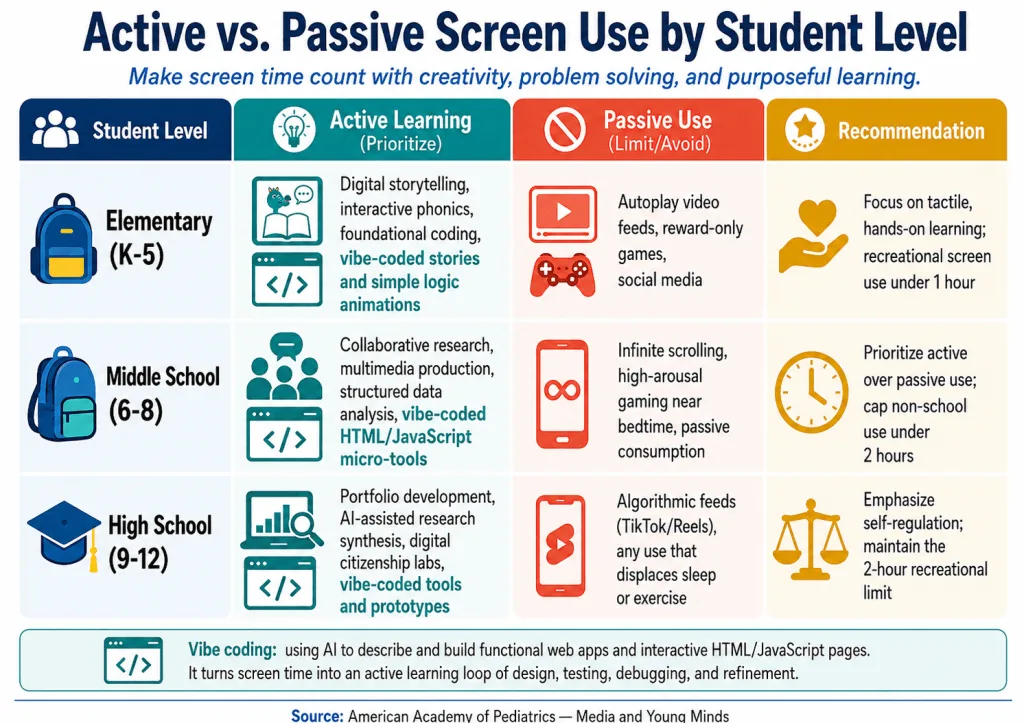
Given the concerns raised, I asked Gemini “What the scientific consensus was on screen time effects on K-12 students?”
The result:
- The “Displacement” Effect: The primary risk is that digital use replaces essential activities like sleep, exercise, and face-to-face interaction. source
- Active vs. Passive Usage: “Active” use (content creation, coding) is associated with better cognitive outcomes than “passive” consumption (scrolling social media). source
- The Two-Hour Threshold: Recreational use exceeding two hours daily is linked to a measurable increase in mental health risks for adolescents. source30278-5/fulltext)
- Sleep Disruption: Blue light and high-arousal content within an hour of bedtime suppress melatonin and delay sleep onset. source
- Reading Comprehension: Students often demonstrate higher retention and deeper comprehension when reading long-form text on paper versus a screen. source
- The “Technoference” Factor: The mere presence of a smartphone can reduce cognitive capacity; performance improves when devices are in a separate room. source
- Social Media and Self-Image: Social media usage is more strongly correlated with negative well-being than other screen activities due to social comparison. source
- Physical Health Risks: Excessive screen time is consistently linked to sedentary behavior and an increased risk of obesity. source
- Executive Function in Early Childhood: For younger students, high screen use is linked to delays in impulse control and executive function development. source
So, what should we be doing with tech in schools?