
The short version
Leverage AI-Powered Publications and Dashboards from June, 2026 conference event, and my 15-minute video version. Also, access all the resources and changes since June, 2026 in the Gen AI space.
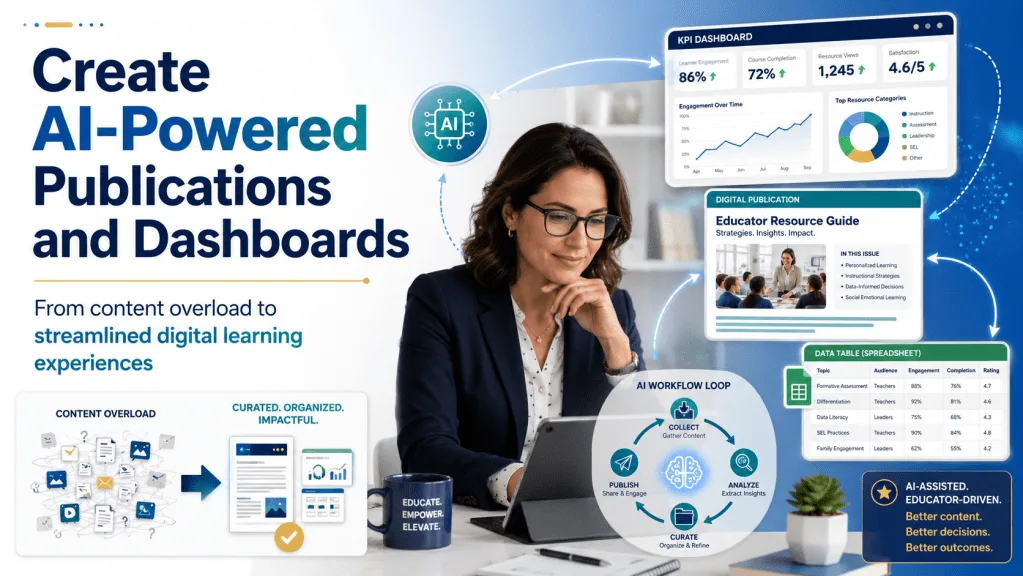
Did you miss my presentation at the TCEA AI for Educator Conference in June, 2026? You might want to reach out to Dr. Bruce Ellis (bellis@tcea.org) and let him know if you’d like to see that event in 2027.
Revisiting My Presentation
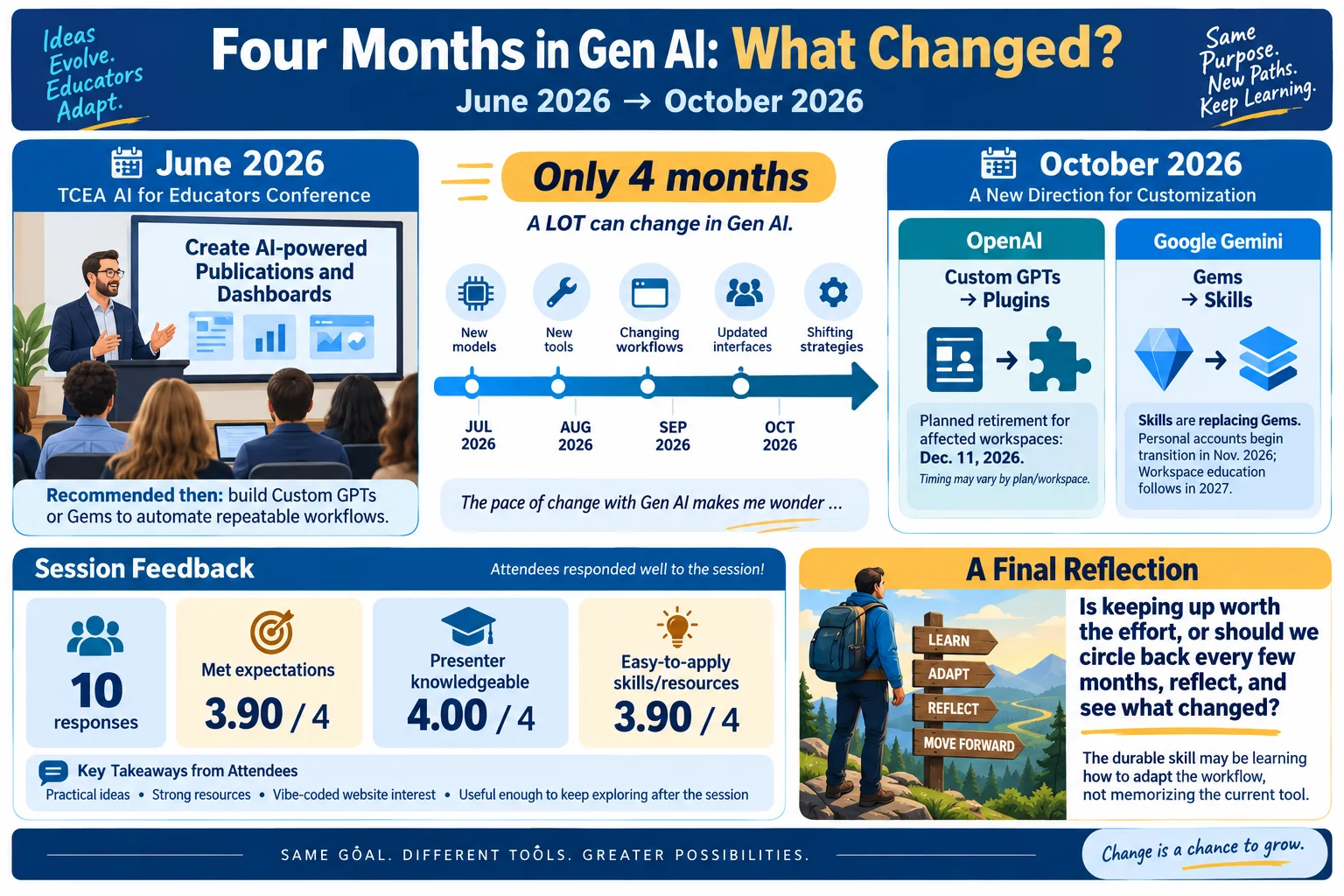
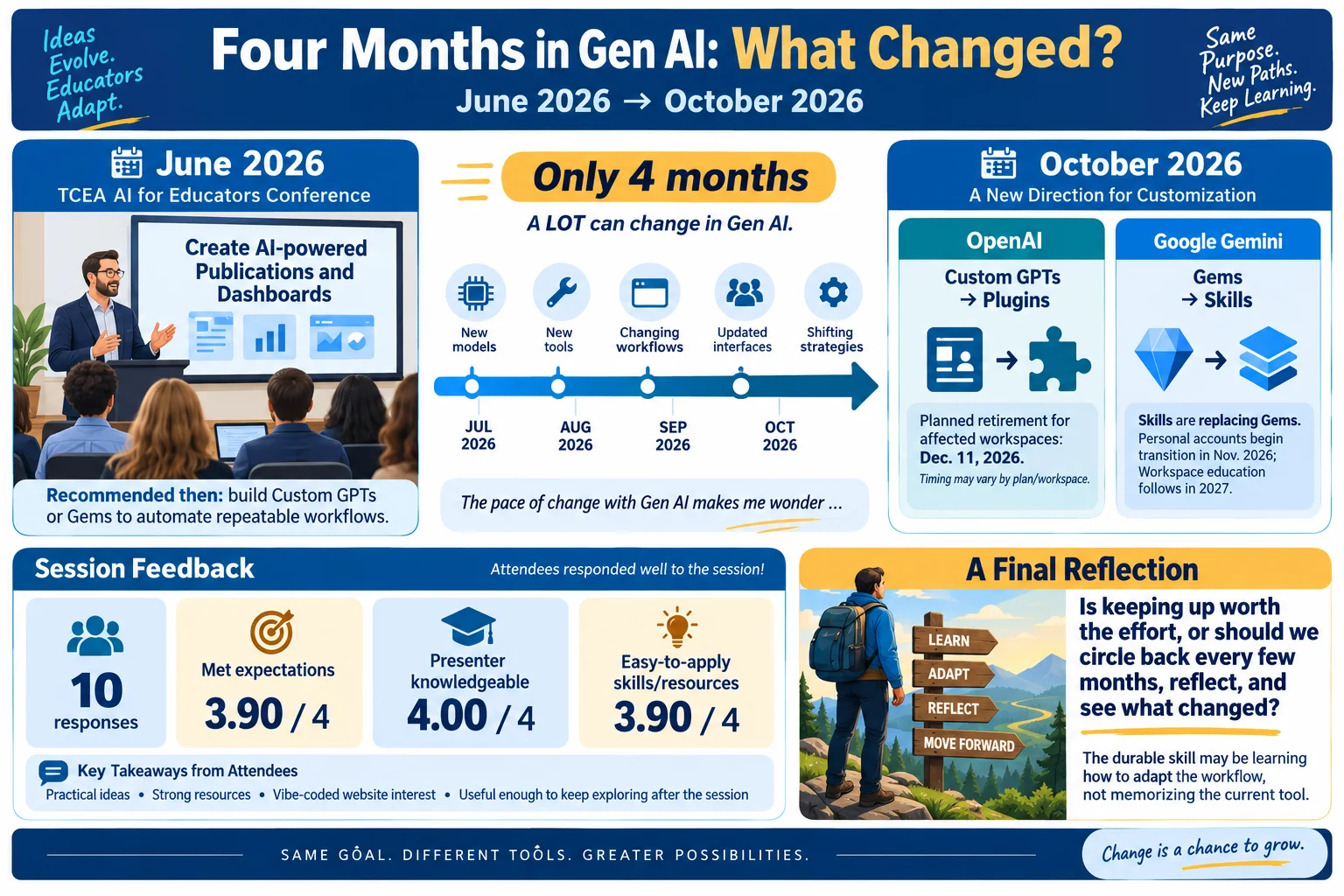
Today, I had the opportunity to review the feedback from that presentation. It’s been some time since I presented that, and I thought I’d do the presentation again, record it along with my musings along the way of how things have changed. A LOT has changed with Gen AI since June, 2026, essentially, only four months. The pace of change with Gen AI makes me wonder, “Is keeping up worth the effort, or just swing around every few months to reflect and see what’s changed?” Obviously, I think so because I updated the Gen AI toolboxes.
For example, relevant to this presentation, where I encouraged fellow educators to create Gems or Custom GPTs to automate the process, now, that’s not the approach to recommend. The reason why is that both OpenAI and Google are in the process of shifting from Custom GPTs (December, 2026) and Gems (November, 2026) to plugins and skills, respectively. That’s a pretty profound change.
Session Feedback
Thank you again for presenting “Create AI-powered Publications and Dashboards” at the AI for Educators Conference in June. I appreciate the time and preparation you put into sharing your work with our attendees.
Attendees responded well to your session…
Here is how to read your scores. Attendees rated each statement on a scale of 1 to 4, where 1 is strongly disagree, 2 is disagree, 3 is agree, and 4 is strongly agree. A 4.00 means every attendee who responded strongly agreed.
- Responses: 10. This is the number of attendees who completed an evaluation for your session.
- Met expectations: 3.90. This is the average rating for whether the session matched what attendees expected based on the title and description. A score this close to 4 is very strong.
- Presenter knowledgeable: 4.00. This reflects how attendees rated your command of the topic. Every respondent strongly agreed.
- Skills or resources I can apply easily: 3.90. This shows how practical attendees found your takeaways, meaning whether they left with something they could use right away. A score this close to 4 is very strong.
Here are the comments attendees shared:
- thank you!
- Lots of good stuff to try out, thank you for sharing the resources!
- This session was full of great ideas. Building a vibe-coded website has been on my radar for awhile now, and it was good to get some more information about how to do this. Thank you!
- Miguel continues to amaze me! I love the passion and energy he brings to the presentation, and the RESOURCES! There is almost an overload of information for my mind, but the resources help with getting a grip and moving forward on new thoughts, ideas, and projects. I hope to have a newsletter solution built for myself by the end of the month!
- Great content, will keep me busy for a while! Thanks you!
- Another amazing session! I appreciate the dedication from the presenter for consistently looking for ways to use AI in order to save time for teaching content and facilitating learning. Thank you!
- Excellent resource that I will need more time to explore and practice.